
Commercial Roofing Contractors Vineyard, UT
Commercial Roofing • Service Areas • Provo,
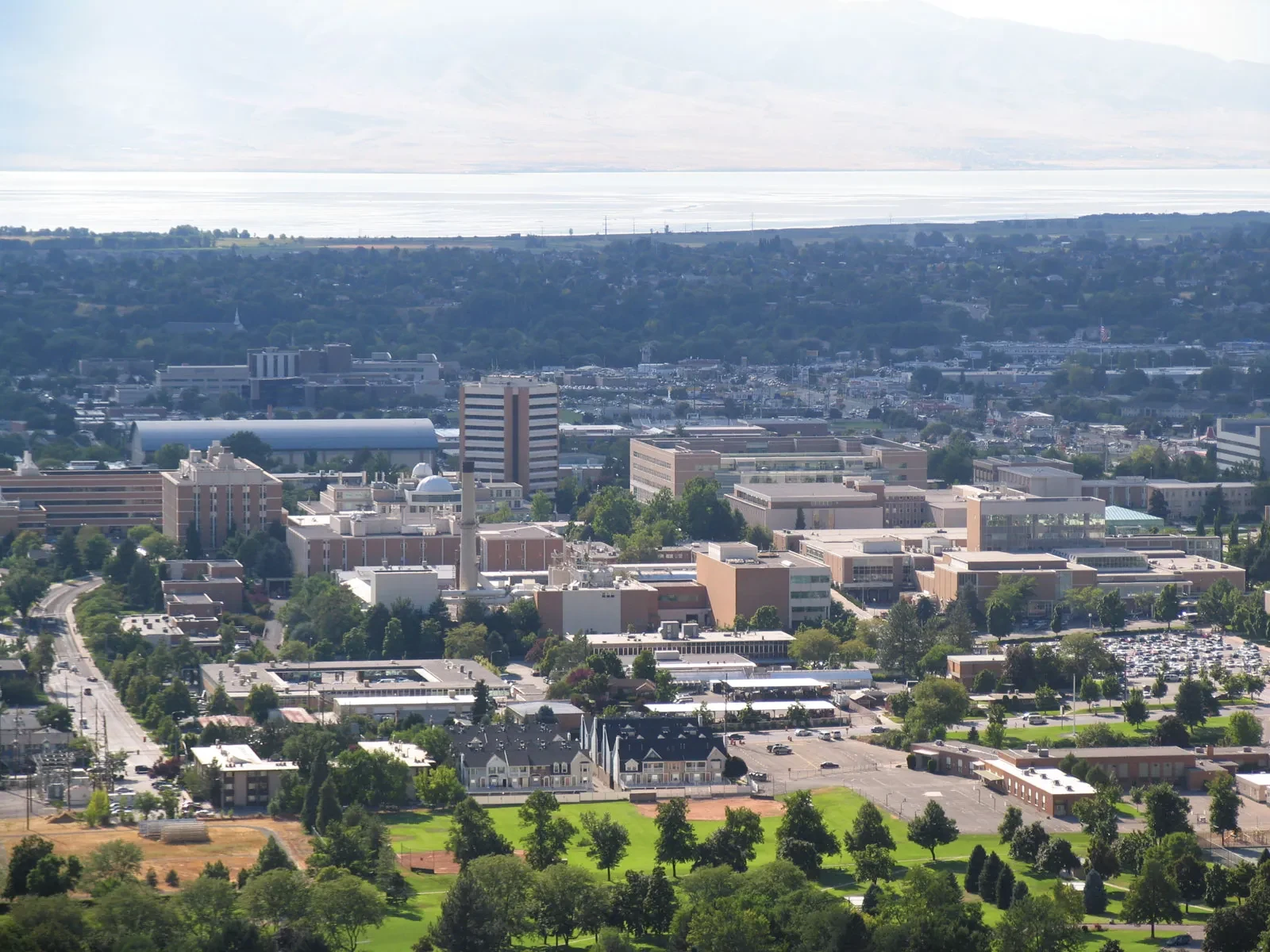
Commercial Roofers in Vineyard, UT
Commercial roofing in Vineyard, UT should begin with a documented assessment of membrane condition, seams, flashings, drainage, penetrations, and moisture before repair, coating, or replacement is selected. Vineyard's commercial roof stock barely existed a decade ago. The Geneva Steel site sat mostly cleared for years, and now the Utah City buildout is putting up office, retail, and mixed-use podium buildings on ground that used to be a steel mill. That's a rare position for us: almost none of this is retrofit work. Almost all of it is a chance to get the insulation and roof assembly right from the first set of drawings instead of correcting it later.
Why Ground-Up Work Changes the Whole Conversation
On an established corridor like State Street or Geneva Road, most of our conversations start with what's already installed and how to improve it. In Vineyard, the conversation starts with the mechanical engineer's cooling load calculations and the architect's parapet details, before a membrane has ever touched a deck. That means insulation R-value, vapor retarder placement, and reflectivity aren't retrofit upsells here , they're baseline decisions that get locked in for the building's entire life the day the roof goes on.
Getting it right the first time on new construction is dramatically cheaper than the correction work we do elsewhere in the valley, and it's the main reason we push hard on roof detailing during design review rather than waiting until the roof is being installed to raise concerns.
Mixed-Use Podium Roofs and Multiple Occupancy Types Under One Deck
A lot of Utah City's early buildings are mixed-use podiums, retail or amenity space at grade with residential or office above, which means the roof over the podium level often sits directly below occupied space with very different thermal and moisture demands than a standalone commercial building. Getting the insulation and vapor barrier placement right on a podium deck is more technical than a simple single-story roof, because the assembly has to perform correctly against conditioned space both above and, in some cases, adjacent to it.
We coordinate closely with the structural and mechanical trades on these jobs specifically because podium roof assemblies fail most often at the interface details , where the roof membrane meets a vertical wall transitioning into occupied space above, not out in the open field of the roof.
Cool Roof Specs Written Into a Master Plan From the Start
Because Utah City is being developed under a coordinated master plan rather than building-by-building on separate lots, there's an opportunity to standardize reflectivity and insulation performance across the whole district rather than letting each building's roof get value-engineered independently. We work from whatever design guidelines the developer has set and verify installed performance matches those guidelines rather than assuming a spec sheet automatically becomes reality on site.
- Confirming installed insulation thickness matches the stamped roof detail, not simply the submittal
- Reflectivity and SRI verification at substantial completion, before punch list closeout
- Vapor retarder continuity at every podium-to-tower wall transition
- Drain and scupper sizing tested against actual roof area, not a generic assumption
- Flashing details at parapets built to handle both Utah Lake's humidity and winter freeze-thaw
What the Utah Lake Shoreline Adds to the Equation
Vineyard sits directly on Utah Lake's eastern shore, and that proximity brings a slightly different moisture profile than inland Provo or Orem buildings see, along with more direct exposure to wind coming off the lake. New construction here gets flashing and fastening details rated for that wind exposure rather than a generic inland spec, and vapor retarder decisions account for the somewhat higher ambient humidity near the shoreline compared to buildings a few miles inland.
Questions From Developers Building in Vineyard
Since this is all new construction, why do we need a roofing contractor involved this early?
Because roof failures on new buildings almost always trace back to a detail that was fine on paper but got altered or value-engineered during construction. Catching that during framing and deck installation is far cheaper than fixing it after occupancy.
Do podium roofs need different waterproofing than a standard low-slope roof?
Yes, particularly at the wall transitions into occupied space above. We treat those interface details as the highest-risk part of the assembly and verify them separately from the open field membrane.
Does the lake affect roof material choices in Vineyard?
It affects fastening and flashing details more than membrane selection. Wind exposure and slightly elevated humidity near the shoreline both push us toward more conservative detailing at edges and penetrations.
Can you verify a roof that a different contractor installed during the base building phase?
Yes, this is common on master-planned districts where different trades handle base building and tenant improvement work. We can inspect and document installed conditions against the original spec before signing off on anything.
Ready to review the roof scope?
Request a Roof Assessment