Commercial Roof Insurance Claim Assistance in Provo, UT
Commercial Roofing • Commercial Roofing Services • Provo,
Getting the Adjuster to See the Whole Roof, Including What's Easy to Miss
A commercial roof insurance claim in Utah County usually is not a question of whether damage happened. It is a question of whether the claim captures everything the roof actually needs, beyond the section that is obvious from a quick walk of the field. We work these claims as the roofing contractor: inspecting, documenting, and building a scope detailed enough that the owner and the adjuster are working from the same accurate picture of the roof.
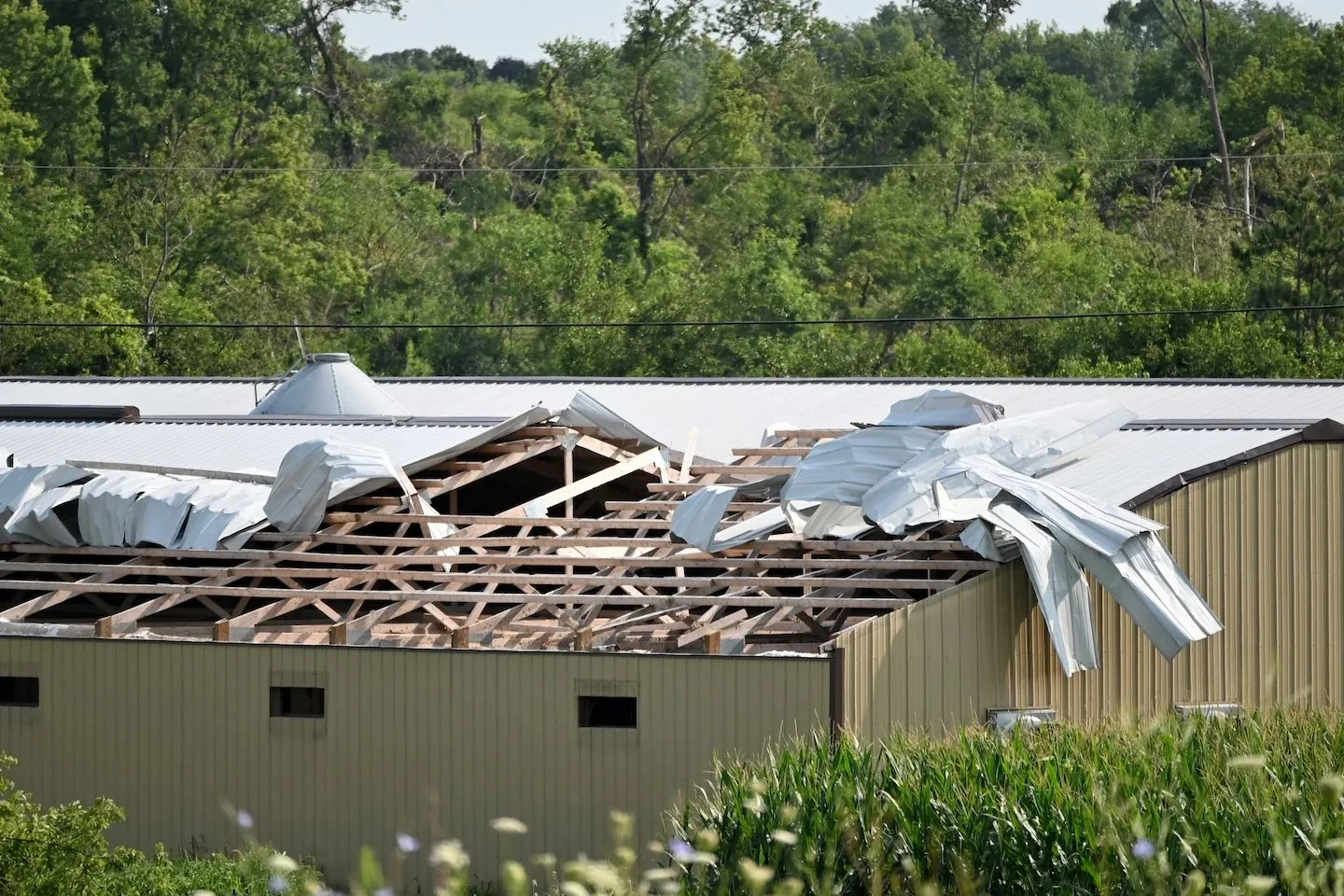
Utah Valley sees a wider range of roof-damaging weather across a single year than most owners expect walking into their first claim. Spring and summer bring hail and wind off the Wasatch Front, Provo Canyon channels sudden gusts into the east side of the valley, and winter adds heavy snow load and ice damming that stresses a low-slope membrane in ways that look nothing like storm damage on the surface. Buildings near BYU along University Parkway, the tech-office corridor pushing north toward Lehi and Silicon Slopes, and the industrial parks strung along Utah Lake in Vineyard and Orem all carry roofs exposed to that full range in a given year.
What a Commercial Roof Claim Actually Requires
A carrier evaluating a commercial roof claim wants specifics: what was damaged, where, how extensive, and what condition the roof was in before the event as best that can be established. A vague damage description slows a claim down and invites disagreement between the owner's contractor and the carrier's adjuster. An itemized, photographed, measured scope gives everyone a shared factual basis to work from, and that record is something we build as part of our own inspection process rather than assembling after the fact.
Documenting Damage Before the Adjuster Arrives
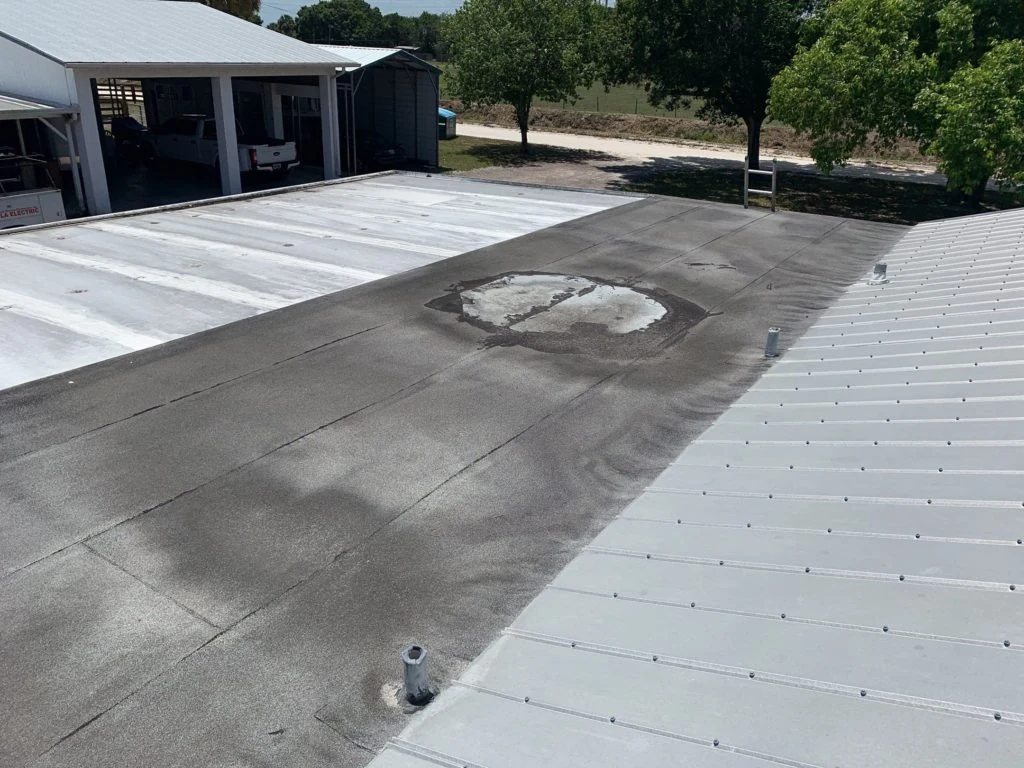
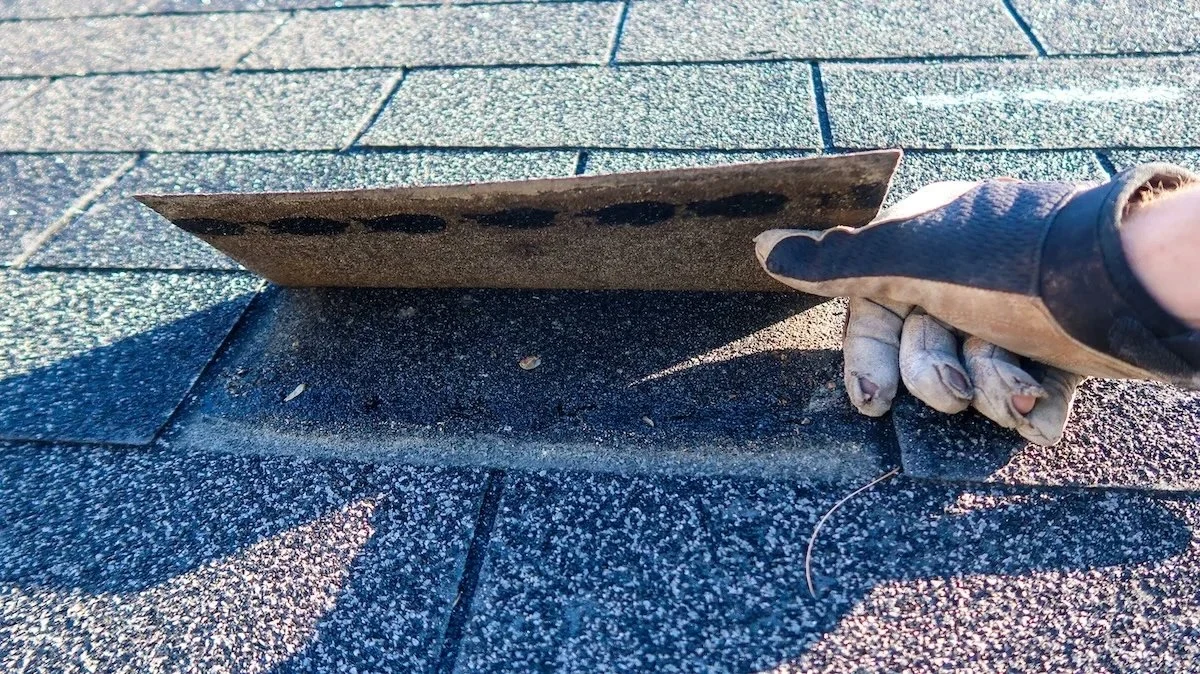
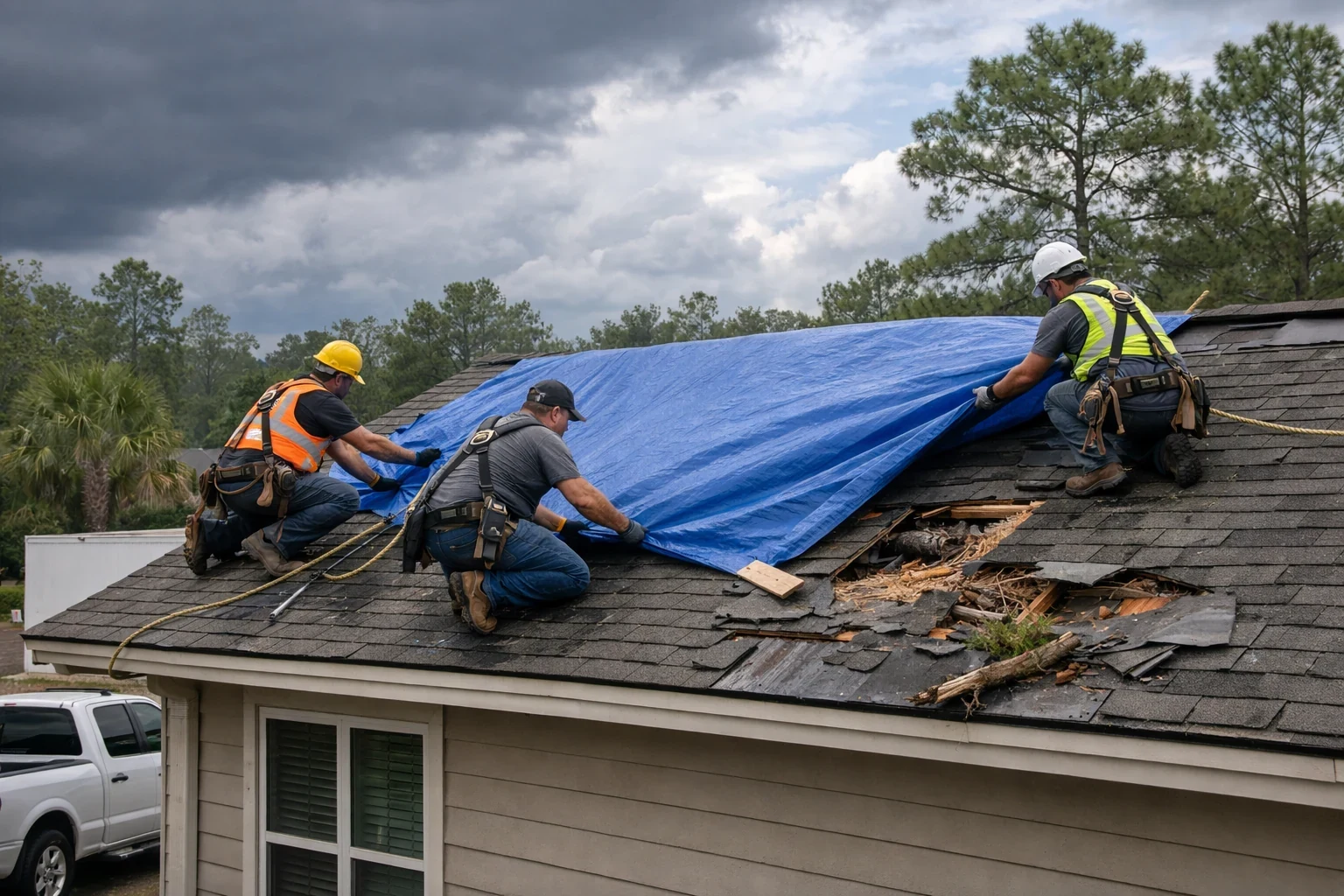
The strongest claims start with documentation gathered before an adjuster ever sets foot on the roof. We photograph every affected area from multiple angles, measure the extent of hail bruising or wind-lifted seams, and run moisture scans where water intrusion into the insulation is a possibility but not yet visible as an interior leak. That last piece matters more than owners usually expect. Wet insulation under an intact-looking membrane is one of the most commonly underestimated parts of a storm claim, and it rarely shows up unless someone is specifically checking for it.
Meeting the Adjuster on the Roof
We are available to walk the roof directly with the adjuster rather than leaving them to interpret a set of photos alone. Pointing to a specific hail impact, a section of edge metal with backed-out fasteners, or a moisture reading on a scanner is a different conversation than a written report handed over cold. On a building with multiple roof sections or a mix of ages, that walkthrough is often where a scope gets corrected before it is finalized rather than after.
Framing a Complete Scope, Beyond the Obvious Damage
Complete here means something specific: nothing legitimate gets left out of the documented scope, including code and ordinance upgrades that apply once a roof section is opened up, and the material and color matching that a partial repair on an otherwise uniform roof actually requires. It does not mean inflating a scope beyond what the roof shows, and we will not put our name on a finding that does not hold up to a second look. We're your roofing contractor on this claim, not a public adjuster; we document and substantiate what the roof needs so you and your adjuster are working from an accurate scope, not a negotiated one.
When a Claim Comes Back Denied or Underpaid
A denied or underpaid claim is often a documentation gap rather than a genuine dispute over what happened to the roof. We can revisit a roof, gather additional photos or moisture data, and supplement the original documentation if something was missed or if the carrier's assessment does not match what the roof actually shows. What we cannot do is guarantee a particular outcome or tell an owner what a carrier will ultimately decide to pay. That determination sits with the policy and the carrier, not with the contractor documenting the damage.
- Photo and measurement documentation of hail, wind, and snow-load damage
- Moisture scanning to catch insulation saturation before it becomes an interior leak
- Adjuster walkthroughs on the roof rather than a written report alone
- Itemized scopes that include code-required upgrades and material matching
- Supplemental documentation if a claim is denied or comes back underpaid
- A retained file for every claim, available for later reference
Insurance Claim Questions From Utah County Building Owners
Does insurance cover a full roof replacement after storm damage?
Sometimes, depending on the extent of damage and the policy itself. A full assessment establishes whether the roof needs isolated repair or a broader section replacement, and that finding is what gets documented for the claim.
What does the claim process typically look like from the roofing side?
We inspect and document first, meet the adjuster on the roof if that is useful, and provide an itemized scope. The owner and the carrier handle the claim itself; our role is making sure the roof's condition is accurately represented throughout.
What happens if a claim gets denied?
We can review the denial, revisit the roof if warranted, and supplement documentation with anything that supports a more accurate picture. We cannot override a carrier's coverage decision, but incomplete documentation is a fixable problem.
Is repair or full replacement the right call after hail or wind damage?
It depends on the extent and the roof's existing condition. Bruised membrane on an otherwise sound roof may only need targeted repair, while widespread damage or an aged system nearing the end of its service life often points toward replacement.
Do you handle the insurance claim itself?
No. We are the roofing contractor, not a public adjuster. We inspect, document, and substantiate the damage so the claim reflects the true scope, but filing and negotiating the claim is between the owner and their carrier.
How does snow-load or ice-dam damage get documented differently from a storm event?
It often shows up as ponding, membrane stress at parapets, or interior staining rather than a single identifiable event, so documentation leans more heavily on measurements and moisture data than on photos of an obvious impact.
Ready to review the roof scope?
Request a Roof Assessment