Roof Drains & Scuppers in Provo, UT
Commercial Roofing • Commercial Roofing Services • Provo,
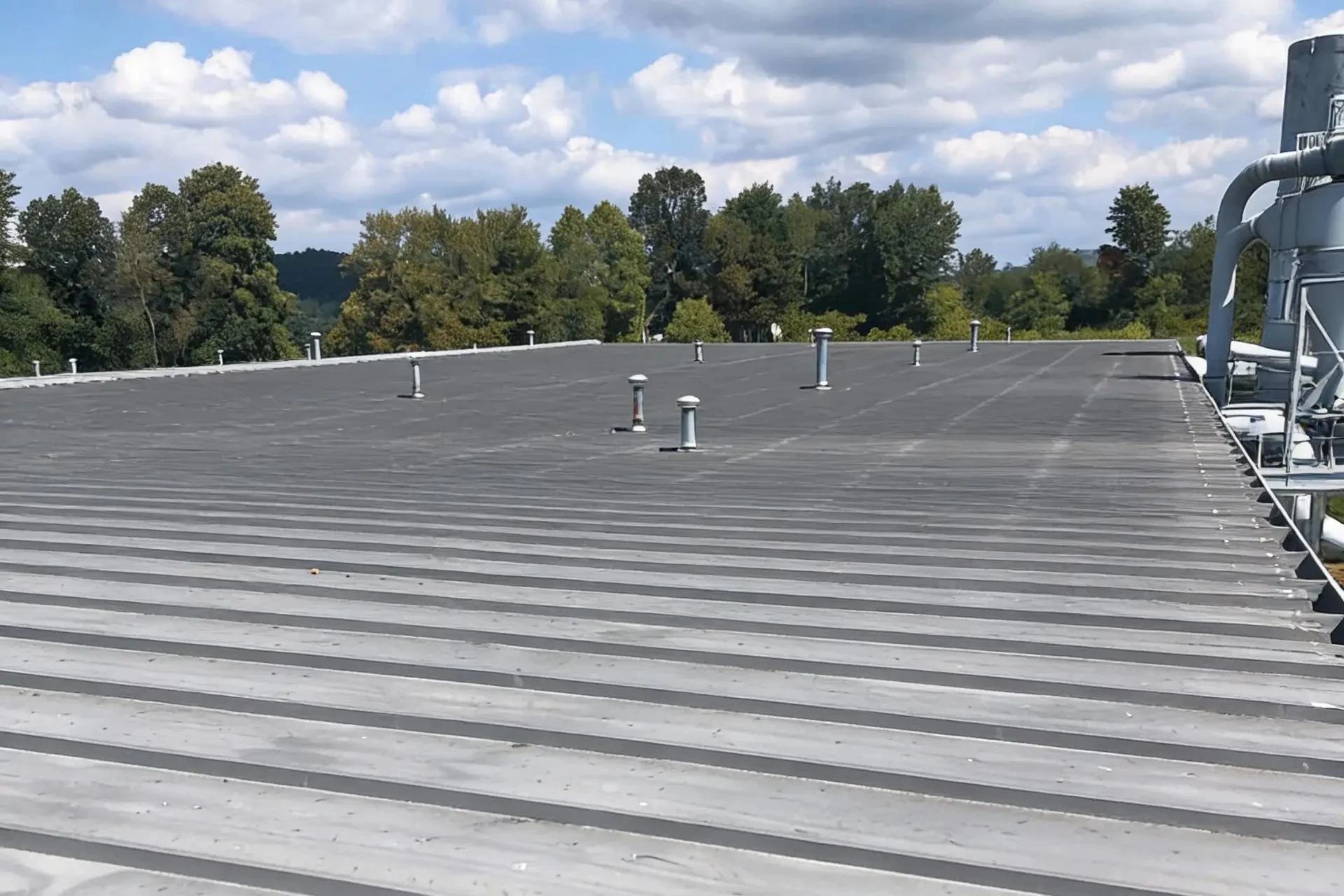
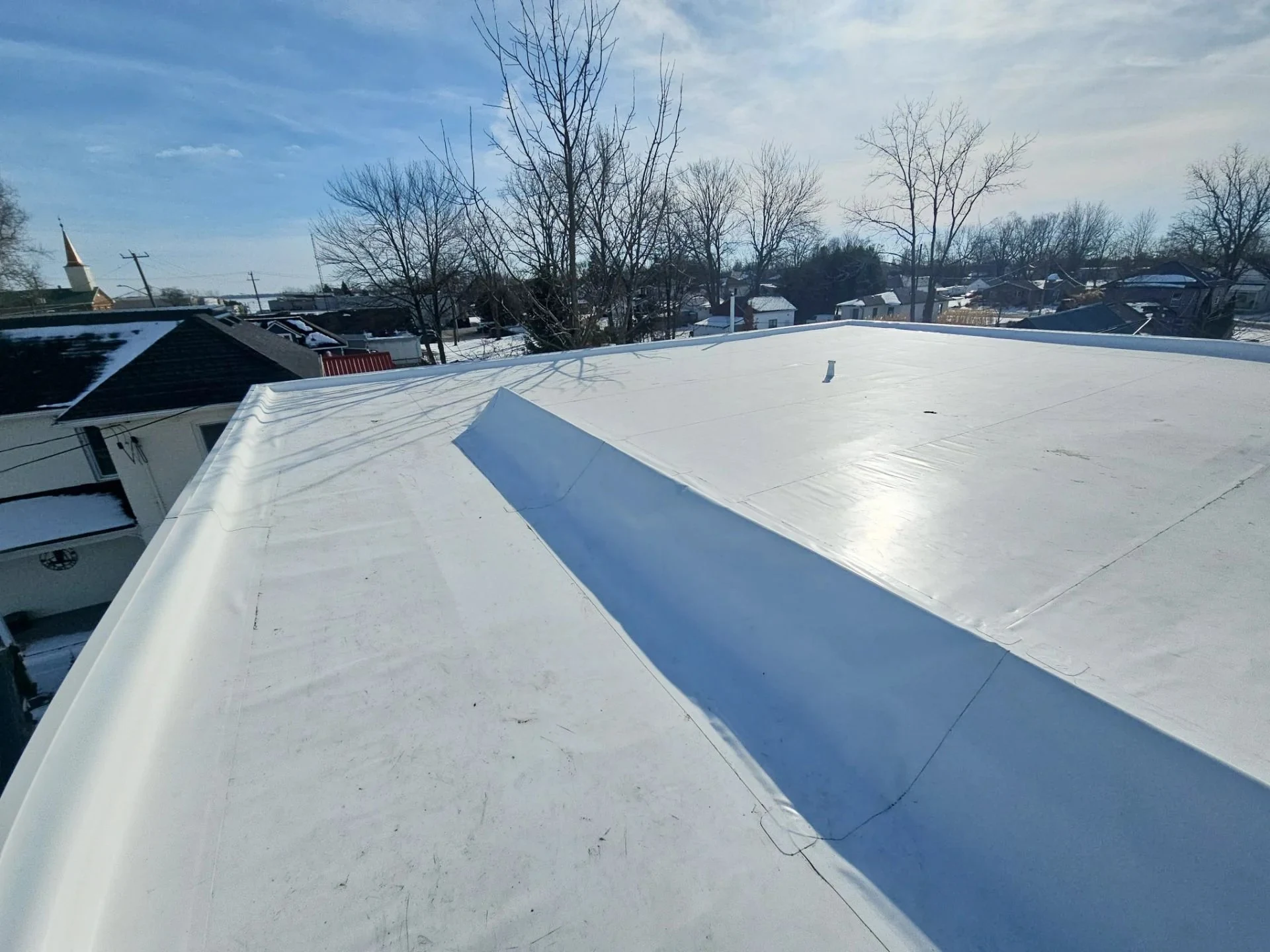
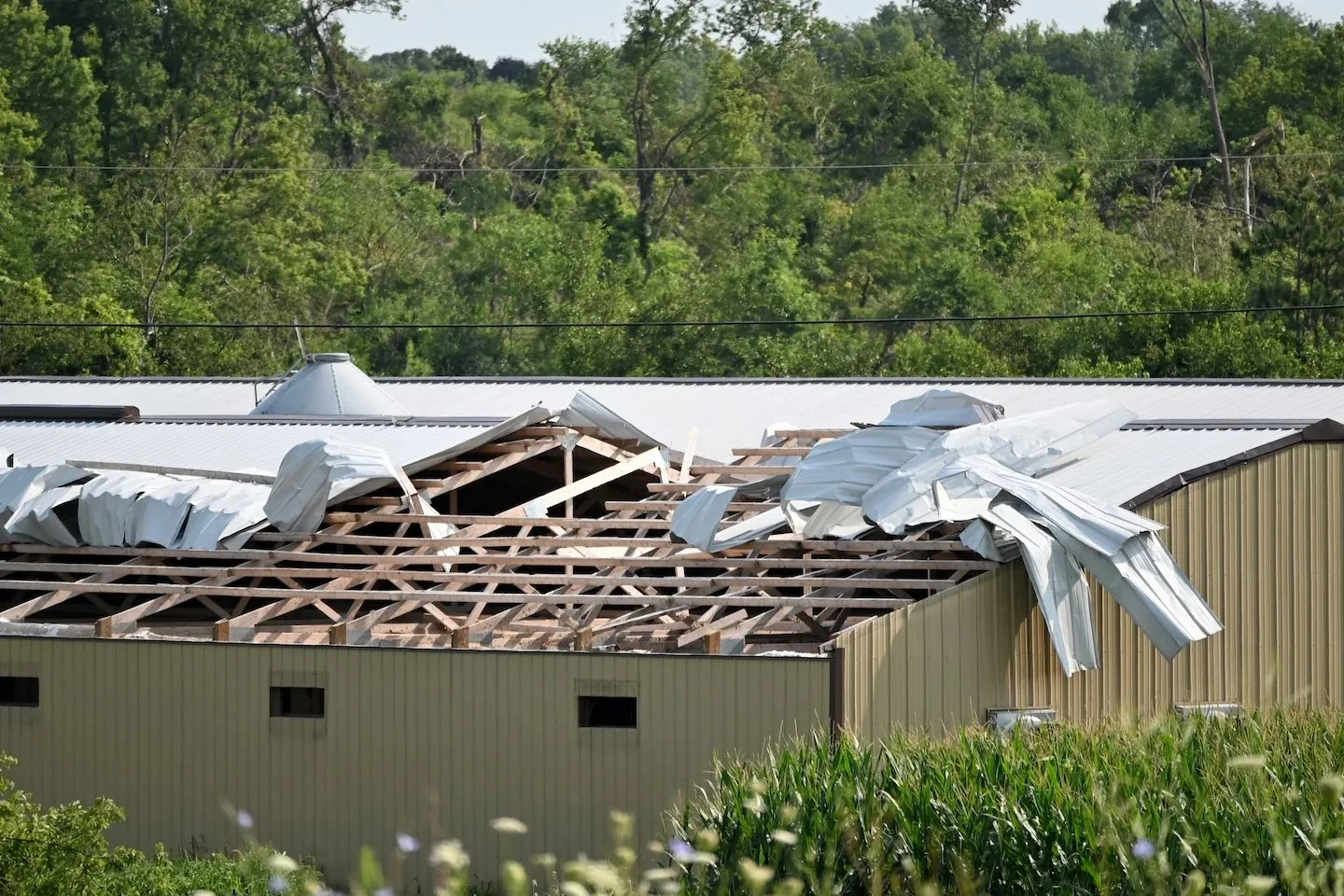
Drainage Sized for What Spring Snowmelt Actually Sends Down a Roof
A roof drain that works fine every summer can still be the reason a building floods during spring melt, because the volume and duration of water moving across a flat roof during a slow multi-day thaw is nothing like a rainstorm. We repair, clear, and design drain and scupper systems around that seasonal reality, rather than only around what a roof needs to handle on an average day.
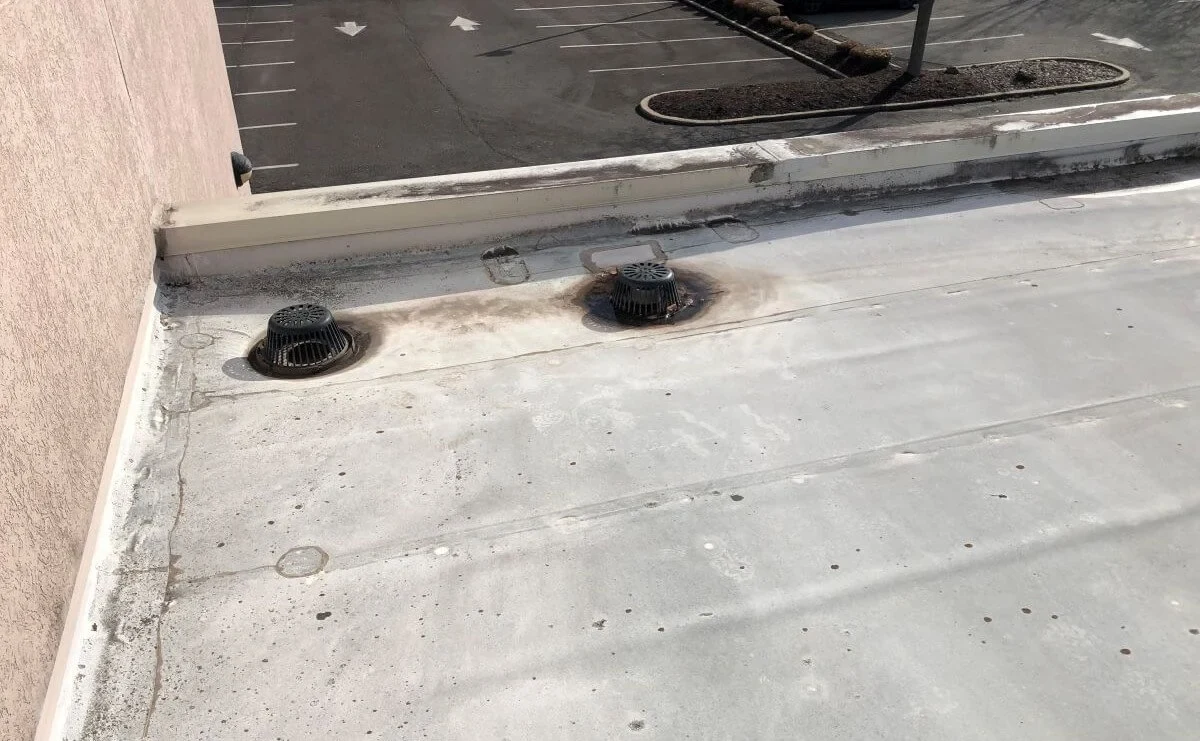
Drainage failures are also an insulation problem in disguise. Water sitting against a drain bowl or backed up behind a clogged scupper does not stay confined to the membrane surface indefinitely. Given enough time and enough freeze-thaw cycling at the same spot, it finds a way into the insulation layer below, which is a slower and less obvious form of the same moisture damage a direct leak causes, just concentrated at drainage points instead of spread across the field.
Owners sometimes assume a drain problem is purely cosmetic, something to deal with once it becomes an obvious puddle after a storm. By the time ponding is visible enough to notice on a casual walk-through, the freeze-thaw cycling that does the real damage has usually already been running at that spot for at least one full winter, which is part of why we treat drain-area inspection as a priority item rather than something to note and revisit later.
Why Standing Water Is Worse Here Than It Looks
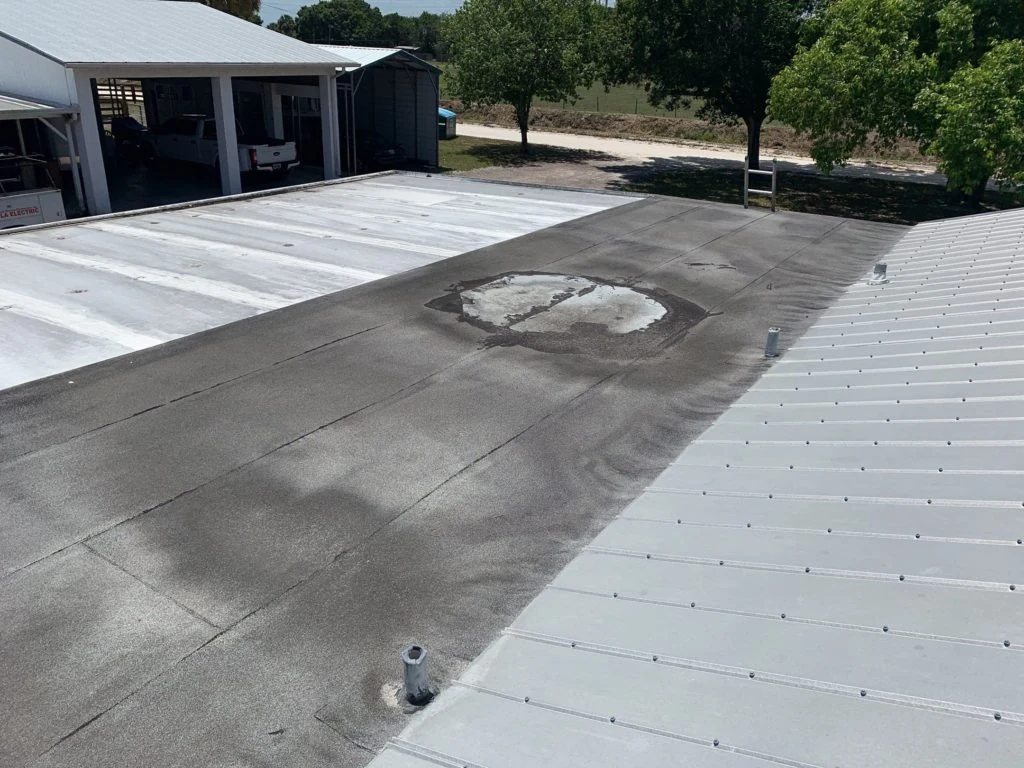
Ponding water on a flat commercial roof accelerates membrane aging everywhere it sits, but the risk compounds in Utah County because ponding often coincides with freeze-thaw cycling. Water that sits against a seam or a drain bowl during the day and then freezes overnight expands into whatever small gap it found, widening it. Do that across a full freeze-thaw season and a drain area that started with minor ponding can develop an active leak that has nothing to do with the drain's basic function and everything to do with repeated freeze cycling at a wet spot.
Historic commercial blocks in downtown Provo, many with older, undersized drain systems from a previous era of roofing standards, see this pattern more than newer construction with drainage designed to current code.
Ice Damming at Drains and Scuppers
Ice damming does not only happen on sloped residential roofs. On a flat commercial roof, snow melts fastest over conditioned interior space and refreezes at cooler edges and drain locations, building an ice ridge that blocks the drain path entirely. Once that happens, meltwater backs up behind the ice dam with nowhere to go, and depending on the roof's parapet height, that water can rise high enough to find its way past flashing details that were never meant to hold standing water at that depth.
We check drain and scupper areas specifically for ice-damming risk during winter maintenance visits, since a partially blocked drain in December can become a fully blocked, ice-dammed drain by February without any new debris ever entering the system.
Internal Drains Versus Scuppers
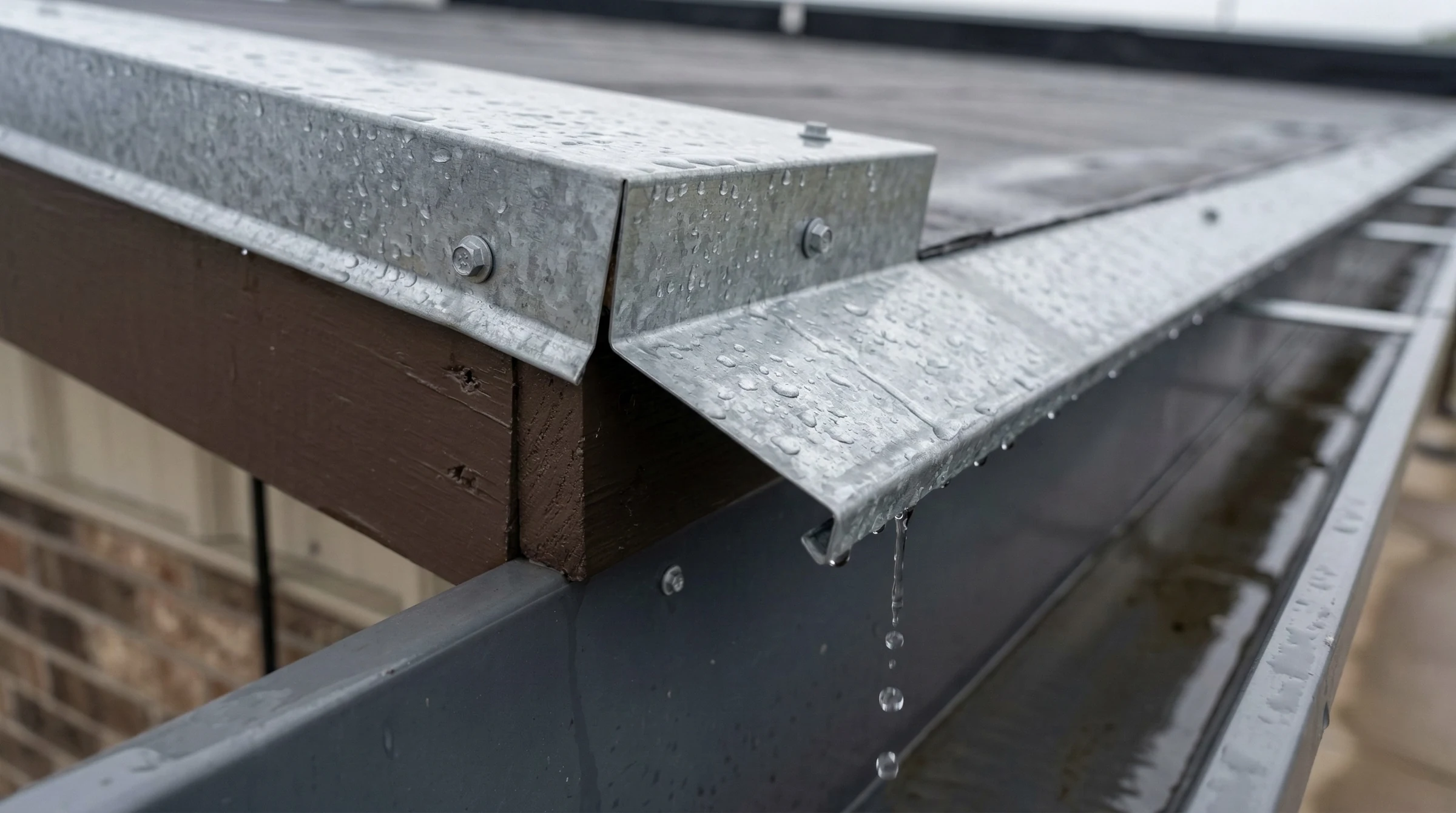
Buildings around Utah Lake's low-lying flatland, including the farming and small-commercial areas near Lake Shore and Benjamin, sometimes rely on older scupper-and-gutter systems that were adequate when built but were never upgraded as roof coverings or drainage codes changed. Internal drains generally handle heavy melt volume more reliably than perimeter scuppers because they pull water off the roof surface at multiple interior points rather than relying entirely on slope carrying it to the edge. Where a roof's tapered insulation and structural layout allow it, we evaluate whether adding internal drain capacity makes sense rather than continuing to lean on an undersized scupper system.
- Drain bowl and strainer clearing as routine maintenance
- Scupper opening sized against roof area and expected melt volume
- Ice-damming risk assessment at drain locations during winter
- Tapered insulation slope verified to route water to drains correctly
- Overflow drain or secondary scupper function confirmed
- Gutter and downspout capacity checked against internal drain load
When Drainage Redesign Makes Sense
Not every drainage problem needs a redesign. Most start with simple debris clearing and confirming existing drains are functioning as installed. But on older downtown buildings where a roof has been recovered multiple times without ever correcting the original tapered insulation slope, ponding can be a structural drainage problem rather than a maintenance one, and we say so plainly rather than clearing the same drain every year without addressing why water keeps collecting in the same spot.
Drain and Scupper Questions From Utah County Owners
How often should roof drains be cleared?
At minimum during each seasonal maintenance visit, with extra attention before the spring snowmelt period when volume is highest.
Can ice damming happen on a flat commercial roof?
Yes. It builds at drain and edge locations where meltwater refreezes, and it can fully block a drain path even without new debris entering the system.
Are internal drains better than scuppers?
Generally more reliable for heavy melt volume, since they pull water from multiple interior points rather than depending on perimeter slope alone, though the right choice depends on the building's structure and layout.
What causes a roof to keep ponding water in the same spot every year?
Usually incorrect or reversed tapered insulation slope from an earlier recover job. Clearing the drain helps temporarily but does not fix a structural low spot.
Does a scupper system need to be resized if the roof covering changes?
It should be checked. A reroof is a good time to confirm existing scupper openings and gutter capacity still match current drainage code and expected melt volume.