EPDM Black in Provo, UT
Commercial Roofing • Roof Systems • Provo,
Black EPDM: Rubber Roofing That Still Has a Place in Utah Valley
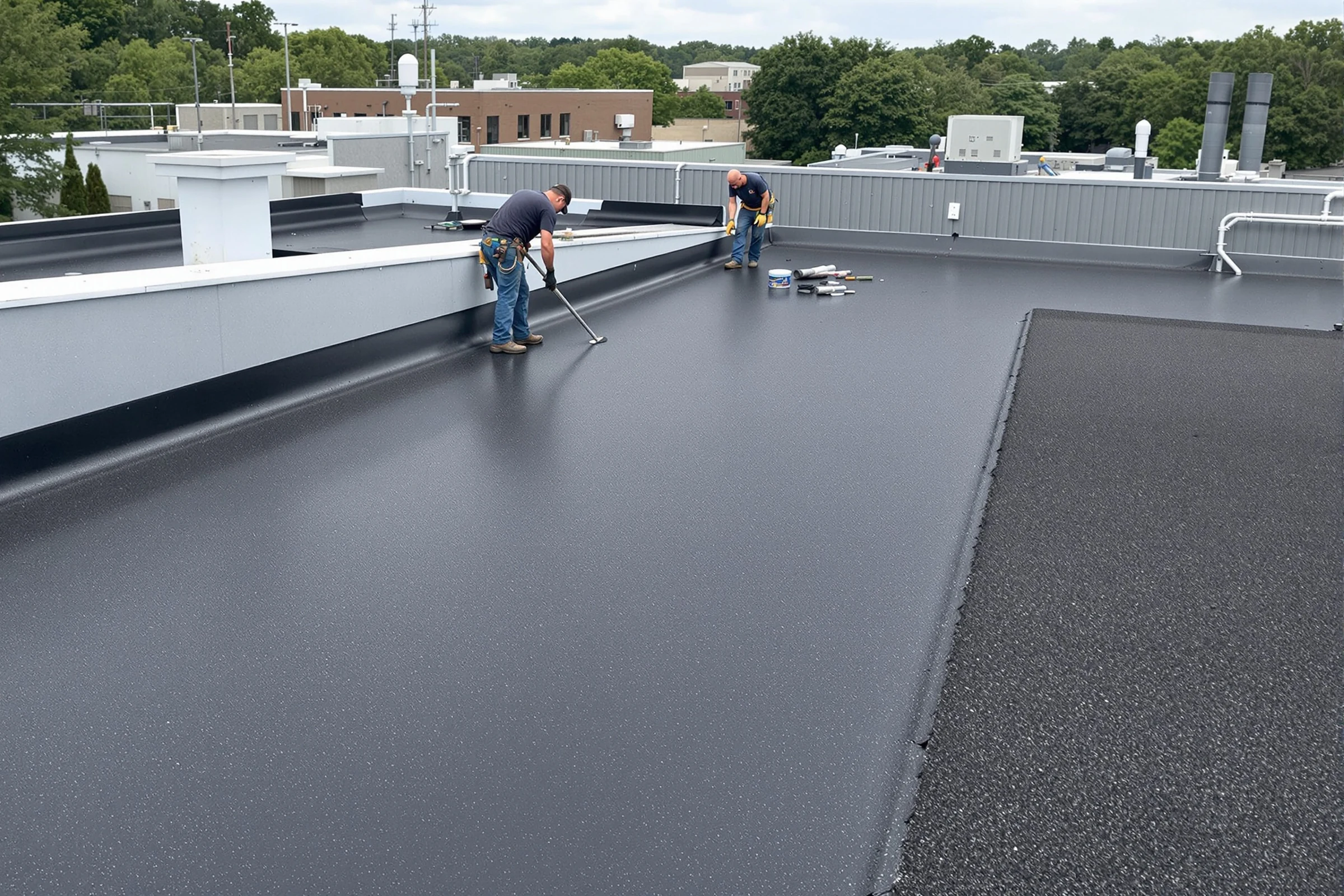
White membrane gets most of the attention on the energy side of a roofing decision, but black EPDM still shows up on plenty of Provo and Orem commercial roofs, and for reasons that have nothing to do with looking dated. Rubber's flexibility at cold temperatures and its long field track record keep it in the conversation, especially on buildings where snow shedding matters more than summer reflectivity.
The Absorption Trade-Off, Stated Plainly
Black EPDM absorbs solar heat instead of reflecting it, which is the opposite of what the energy-code conversation usually pushes toward. On a cooling-dominated building, that's a real utility-cost disadvantage compared to white membrane, and we say so directly rather than downplaying it.
But heat absorption isn't purely a downside in this climate. A black roof surface warms faster under weak winter sun, which helps shed light snow accumulation and reduces the freeze-thaw ponding that can form when snowmelt refreezes overnight on a cooler, more reflective surface. On buildings where winter roof-surface icing has been a recurring maintenance headache, that absorption works in the owner's favor for several months of the year even as it costs more in July.
Flexibility Across a Wide Temperature Swing
Utah Valley's temperature range , well below freezing most winter nights, into the 90s on summer afternoons , asks a lot of any membrane's material flexibility. EPDM rubber stays pliable across a wider temperature band than some thermoplastics, which matters most at flashing details, corners, and penetrations where the membrane has to move without cracking as the deck expands and contracts.
That flexibility is also why EPDM has such a long field history on low-slope commercial roofs generally. It's a simpler polymer chemistry than TPO or PVC, and it ages in a well-documented, predictable way rather than through failure modes contractors are still learning about.
Seaming: The Real Weak Point to Manage
EPDM's main vulnerability isn't the membrane field, it's the seams. Unlike heat-welded thermoplastics, EPDM seams are typically bonded with liquid adhesive or seam tape, and that bond is only as good as the surface prep and the installer's attention to primer coverage and roller pressure during install. A poorly seamed EPDM roof will show lap failures years before the membrane itself shows any wear.
We spend more time on seam inspection during EPDM installs than on almost any other part of the job, because that's genuinely where most long-term EPDM problems originate.
- Buildings with a documented history of winter surface icing on reflective roofs
- Ballasted assemblies where membrane color has minimal energy impact under stone
- Re-roofs matching an existing EPDM system already installed on an adjoining section
- Budget-driven projects where the reflectivity premium isn't the deciding factor
- Roofs with heavy movement joints where flexibility outweighs reflectivity
Where the Insulation Package Has to Compensate
Because black EPDM gives up some of the passive cooling benefit a reflective membrane provides, we lean harder on the insulation layer underneath to hit the building's energy targets. A thicker or better-performing polyiso layer can offset a meaningful share of what a reflective surface would have handled on its own, and on a re-roof that's often the more cost-effective lever to pull anyway.
For owners weighing EPDM against a white membrane purely on utility cost, that's usually the honest answer: the insulation decision matters more than the membrane color once you're comparing total building energy performance rather than roof-surface temperature alone.
Attachment Methods We Use Locally
Mechanically fastened and fully adhered EPDM both see use around Provo depending on the deck type and the wind-uplift rating required. Ballasted EPDM, held down with a layer of stone, is less common on new commercial work here because of the added structural load the stone adds, but it still turns up on older buildings originally built that way.
On a re-roof over an existing ballasted system, we usually evaluate whether the deck can keep carrying that stone load before assuming ballast is the right path forward again. Removing stone and switching to mechanical attachment sometimes makes more sense once a deck has aged, especially on older masonry or steel-joist buildings common in downtown Provo's older commercial stock.
Repair and Maintenance Patterns Specific to This Membrane
EPDM repair work tends to concentrate around the same handful of failure points: seam laps that have separated, pitch pans that were never resealed on schedule, and flashing at parapet walls where the membrane has pulled loose from repeated thermal movement. A maintenance program that checks those specific points twice a year catches most EPDM problems before they turn into an interior leak, which is cheaper for the owner than emergency repair after water has already reached the deck.
Questions About Black EPDM on Utah Valley Roofs
Is black EPDM still a good option if energy cost matters to the owner?
It can be, once the insulation package is sized to compensate. We run the numbers both ways rather than assuming white membrane always wins on total cost.
Does black EPDM shorten HVAC equipment life by running hotter?
Rooftop units are typically insulated and shielded from direct deck-surface heat, so the bigger impact is on the building's cooling load overall rather than on the equipment itself.
How long do EPDM seams typically last before needing attention?
It depends heavily on original installation quality and ongoing maintenance. Regular seam inspection during routine roof maintenance catches early lap separation well before it becomes a leak.
Can black EPDM be recoated later to improve reflectivity?
Yes, a reflective coating can be applied over sound EPDM to change its solar performance without a full tear-off, which is a common mid-life upgrade path.
Is EPDM a good match for a roof with a lot of rooftop penetrations?
EPDM's flexibility helps around irregular flashing details, but each penetration still needs proper detailing. More penetrations mean more places for a marginal seam to start a leak, regardless of membrane type.