Johns Manville Roofing in Provo, UT
Commercial Roofing • Roofing Manufacturers • Provo,
Johns Manville: A Broad, Long-Standing Commercial Roofing Catalog
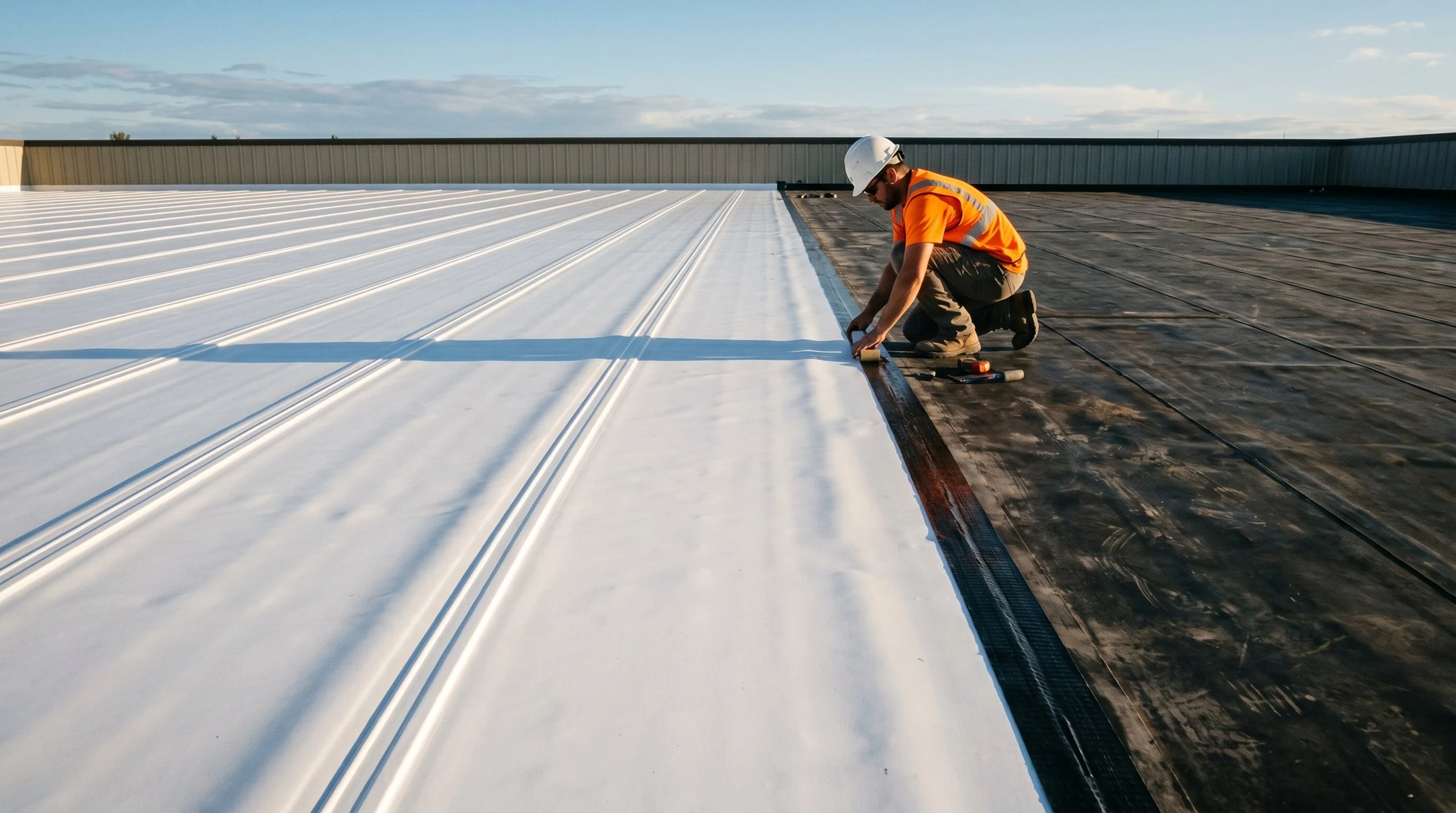
Johns Manville has manufactured roofing and insulation materials for a long time, and its commercial roofing division now covers TPO, PVC, modified bitumen, and built-up roofing components alongside a large insulation lineup. That breadth is useful on projects around Provo and Orem where a building's re-roof might need to match an existing system type rather than convert entirely to something new, and it means fewer compromises when a roof combines two or more system types.
TPO and PVC Membrane Options
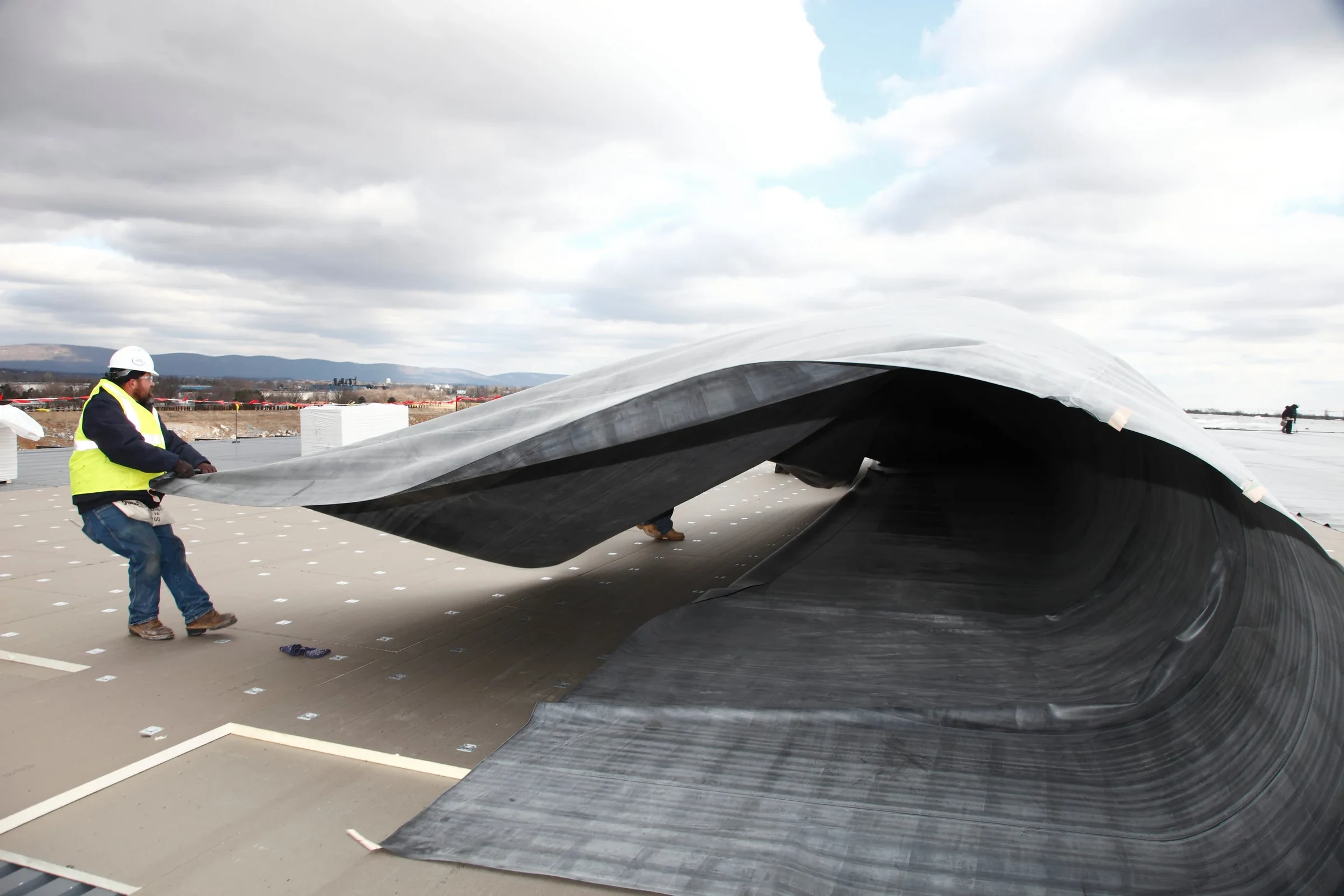
Johns Manville's single-ply lines cover the standard thickness and reflectivity range we spec on most flat commercial roofs, office and retail buildings along University Parkway, flex-industrial space in Springville and Lindon. Their PVC line specifically comes up on restaurant and grocery projects where grease or chemical exposure rules out standard TPO, since PVC's chemical resistance holds up better under that kind of contact over years of service.
Modified Bitumen for Multi-Ply Redundancy
On buildings where hail history or heavy rooftop foot traffic argues for a multi-ply system over single-ply, Johns Manville's SBS-modified bitumen ply sheets and cap sheet options give us that redundancy. We spec cap sheet color and finish based on the reflectivity target for the building, since a granulated dark cap sheet and a reflective white one perform very differently on the energy side even within the same base system.
Insulation Line and R-Value Planning
Johns Manville's polyiso insulation products are a significant part of their catalog, and insulation sizing is where a lot of the real utility-cost improvement on a re-roof actually happens. We check their published R-value data against the energy code Utah has adopted for commercial buildings, and we account for the roof's specific insulation needs, older buildings with undersized original insulation, buildings converting to a higher cooling-load use, rather than defaulting to a standard thickness across every job.
Fire and Wind Uplift Ratings
Johns Manville publishes third-party tested fire and wind-uplift ratings for its assemblies, which matter directly here given how strong downslope wind events out of Provo Canyon can get on the valley floor. We size fastening patterns and attachment method to the building's actual height and exposure category rather than treating uplift resistance as a formality to satisfy a permit reviewer.
- TPO and PVC single-ply membrane systems
- SBS-modified bitumen ply sheets and cap sheets
- Polyiso insulation across a range of R-values
- Cover board and substrate protection products
- Tested fire-rated and wind-uplift assemblies
What This Page Isn't Claiming
No specific Johns Manville certified-contractor or Peak Advantage program status is being claimed here. Manufacturer program requirements and levels change, and we'd confirm current status directly for a given project rather than represent it on this page. What we control is spec-compliant installation and thorough documentation, moisture scans before recover work, seam and weld checks, and photo records at every stage of the job.
A re-roof over an existing built-up assembly, a new single-ply install on new construction, and a restaurant needing chemical-resistant membrane all point toward different parts of Johns Manville's catalog, or toward a different manufacturer entirely. We evaluate the existing roof and the building's actual use before recommending a specific product line, and we're direct with owners when a different manufacturer's product is the better fit for their specific building.
Manufacturing History and Long-Term Product Support
Johns Manville has been manufacturing building materials for a long time, and that history matters practically for sourcing matching accessories or compatible products years after an original install. On an older roof that's due for a partial recover or a targeted repair rather than full replacement, having a manufacturer with a stable, long-running product line makes it easier to source components that will actually work with what's already up there instead of forcing a full system swap just to get a compatible flashing detail.
A share of the older institutional and downtown Provo buildings still carry original built-up asphalt roofs, layers of felt and asphalt rather than a modern single-ply or modified bitumen system. Johns Manville still supports that legacy category with base sheets, asphalt, and cap sheet options, which matters when a building's structural or budget situation calls for maintaining the existing system type rather than converting it entirely during a repair or partial re-roof.
Questions About Johns Manville Products
Does Johns Manville make products for both new construction and restoration?
Yes, their line covers new single-ply installation, modified bitumen re-roofing, and insulation upgrades, which is part of why they show up across different project types in this market.
Is Johns Manville PVC comparable to other manufacturers' PVC?
Core chemical resistance is broadly similar across major PVC manufacturers. We compare specific thickness, reflectivity, and warranty terms for the project rather than treating any one brand as automatically the right call.
How does Johns Manville insulation perform against Utah's energy code?
Their polyiso products come in a range of R-values that can meet or exceed current code minimums when sized correctly for the roof's total assembly, including any existing insulation being retained.
Do their wind-uplift ratings account for Provo Canyon's wind events?
Published ratings are based on standardized testing categories. We match the building's actual height and exposure to the appropriate rating category rather than assuming a single uplift number applies everywhere.
Can Johns Manville modified bitumen be installed over an existing single-ply roof?
Generally not directly; the two system types typically require different substrate prep. We'd evaluate a tear-off or a compatible transition detail rather than assume direct compatibility.