K-12 School Roofing in Provo, UT
Commercial Roofing • Commercial Project Types • Provo,
School Roofs Across Alpine, Provo City, and Nebo Districts
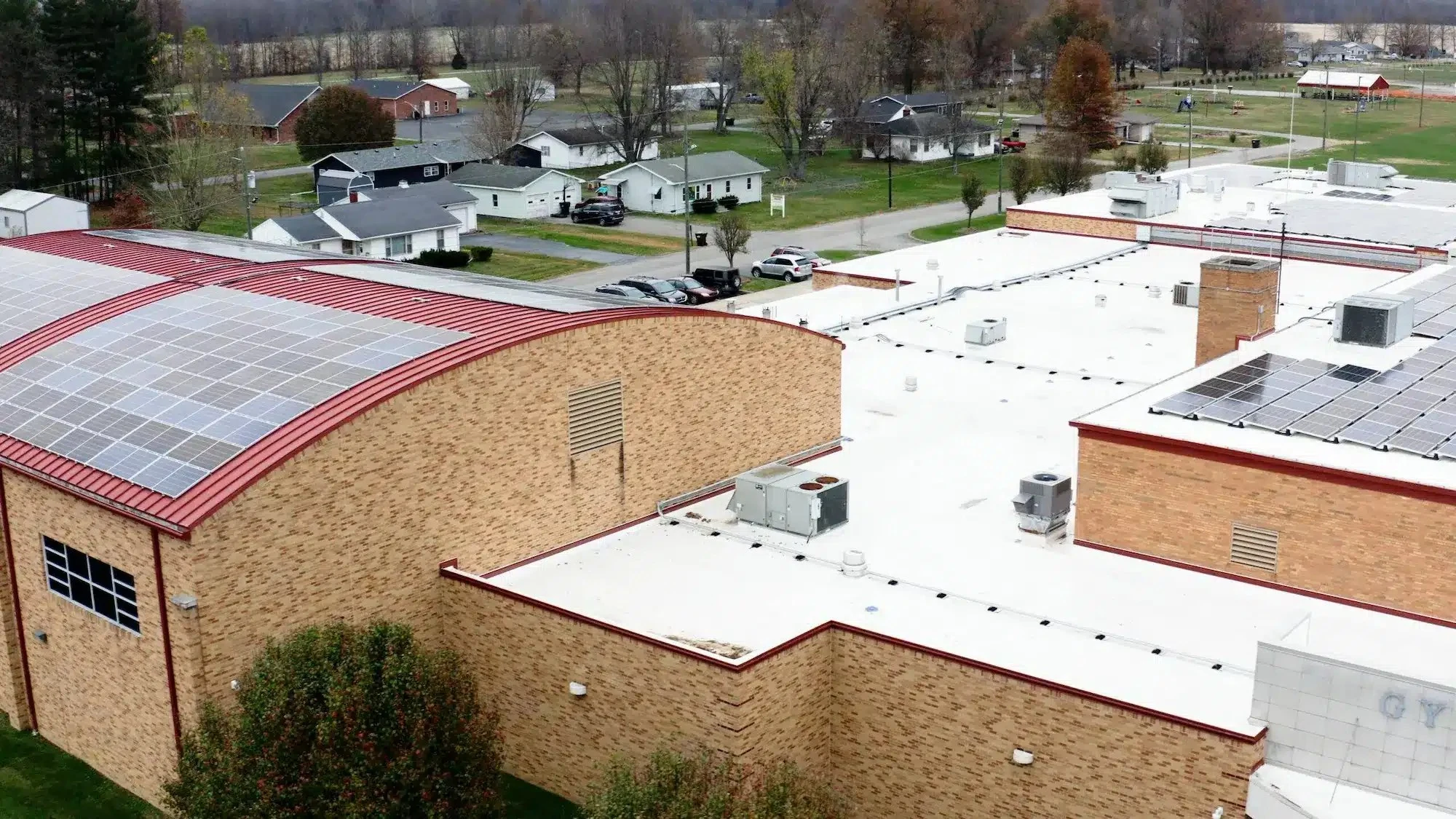
Alpine School District is one of the fastest-growing districts in the state, adding new schools across Lehi, Saratoga Springs, and Eagle Mountain as those cities fill in, while Provo City School District and Nebo School District manage a mix of older neighborhood schools and newer buildings further south. A district's roof portfolio spans decades of construction, and we treat a new elementary school differently than a 1960s junior high with three recover layers already on the deck.
Summer Is the Only Real Window, and It's Shorter Than It Looks
A school roof replacement has to happen between the last day of school in late spring and the first day back in August, and that window gets eaten into fast once you account for custodial deep-cleaning schedules, summer school sessions, and district maintenance crews working their own punch lists. We plan material staging and crew scheduling around the actual district calendar, not a generic summer estimate, so a project doesn't run into the first week of classes.
Smaller repairs during the school year still happen, but we schedule around instructional hours and avoid staging equipment near active recess areas or bus loading zones whenever a repair can't wait for break.
New Growth Schools in Saratoga Springs, Eagle Mountain, and Lehi
The pace of new school construction in the fast-growing western half of the district means a lot of these buildings are still under warranty, and our work on them tends to be inspection, minor repair, and documentation rather than replacement. We check flashing and penetration details on newer construction closely, since installation errors on a brand-new school roof are more common than most owners expect and catching them early keeps a warranty claim clean.
Older neighborhood schools in established parts of Provo, Orem, and Springville carry a different profile, often with built-up or modified bitumen systems that have been patched and recovered across multiple administrations. We give districts an honest read on whether another recover makes sense or whether a school has reached the point where full replacement is the better use of a limited capital budget.
Gymnasium and Multipurpose Room Roofs Carry Different Loads
A school gymnasium roof typically spans wider than a standard classroom wing, and that wider span changes how snow load and drainage get engineered, particularly at schools built up toward the bench in Highland, Alpine, and Pleasant Grove where ground snow loads run higher than valley-floor sites. We check these wide-span sections specifically for ponding and drift buildup during winter inspections, since a gym roof failure during a basketball season is a different kind of disruption than a leak in an empty storage room.
Cafeteria and multipurpose room roofs often carry rooftop kitchen exhaust equipment too, and we flag grease and heat exposure around those penetrations as a standard part of any school inspection.
- Elementary school buildings with classroom wings
- Junior high and middle school campuses
- High schools with gymnasiums and auxiliary athletic facilities
- District administration and support buildings
- Portable and modular classroom roof transitions
- Cafeteria and multipurpose rooms with kitchen exhaust
Classroom Energy Load and the District Utility Budget
Classroom HVAC runs on a predictable daily schedule, but insulation condition still drives a meaningful share of a school's utility bill, especially in older buildings where insulation has compressed or absorbed moisture over decades of patch repairs. We evaluate insulation alongside membrane condition during assessments, since a district weighing a recover against a full tear-off benefits from knowing whether the insulation underneath is actually still doing its job.
Reflective membrane choice matters on schools too, particularly on single-story classroom wings with large roof-to-floor ratios where summer heat gain through the deck puts real strain on classroom cooling during the tail end of the school year and any summer session use.
Working With District Facilities and Bond Timelines
School districts plan roof replacement against bond cycles and multi-year capital plans, and our condition reports are built to support that process, with remaining service life estimates and rough cost ranges a facilities director can bring into a board budget conversation. We coordinate with district maintenance staff directly rather than working around them, since a district crew often handles ongoing small repairs between our larger visits.
We also communicate clearly when a repair signals a wider issue likely to affect other schools built in the same construction phase, which matters most in a district growing as fast as Alpine's, where several schools built within a few years of each other tend to share the same original roofing contractor's choices and the same eventual failure points.
Questions District Facilities Staff Ask Us
Can a roof replacement really finish before the first day of school?
We schedule material and crew staging against the district's actual calendar, accounting for custodial and maintenance work already planned for the summer window.
Do you inspect new-construction schools still under warranty?
Yes, we check flashing and penetration details closely on newer buildings, since catching installation issues early keeps a warranty claim clean.
How do you handle wide-span gymnasium roofs?
We check them specifically for ponding and snow drift, particularly at bench-elevation schools where ground snow loads run higher than valley-floor sites.
Does insulation condition affect our utility budget even without a visible leak?
Yes, compressed or moisture-affected insulation drives up HVAC cost well before it causes a leak, which is why we evaluate it alongside the membrane.
Can your reports support a bond-cycle capital plan?
Yes, we provide remaining service life estimates and cost ranges built for a board budget conversation, not merely a pass-fail inspection note.