Multi-Tenant Retail Strip Roofing in Provo, UT
Commercial Roofing • Commercial Project Types • Provo,
Strip Center Roofs Along State Street and Sandhill Road
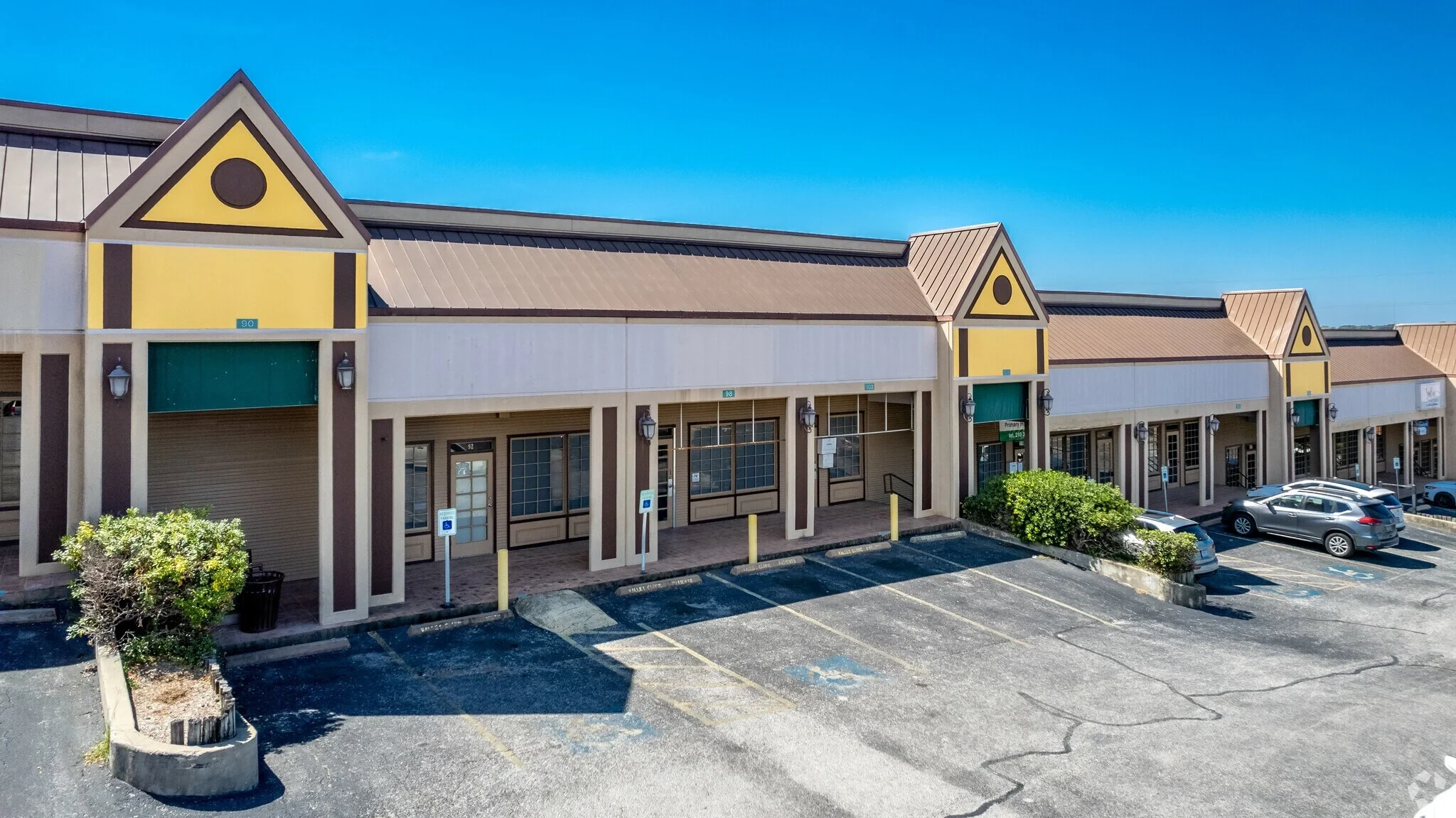
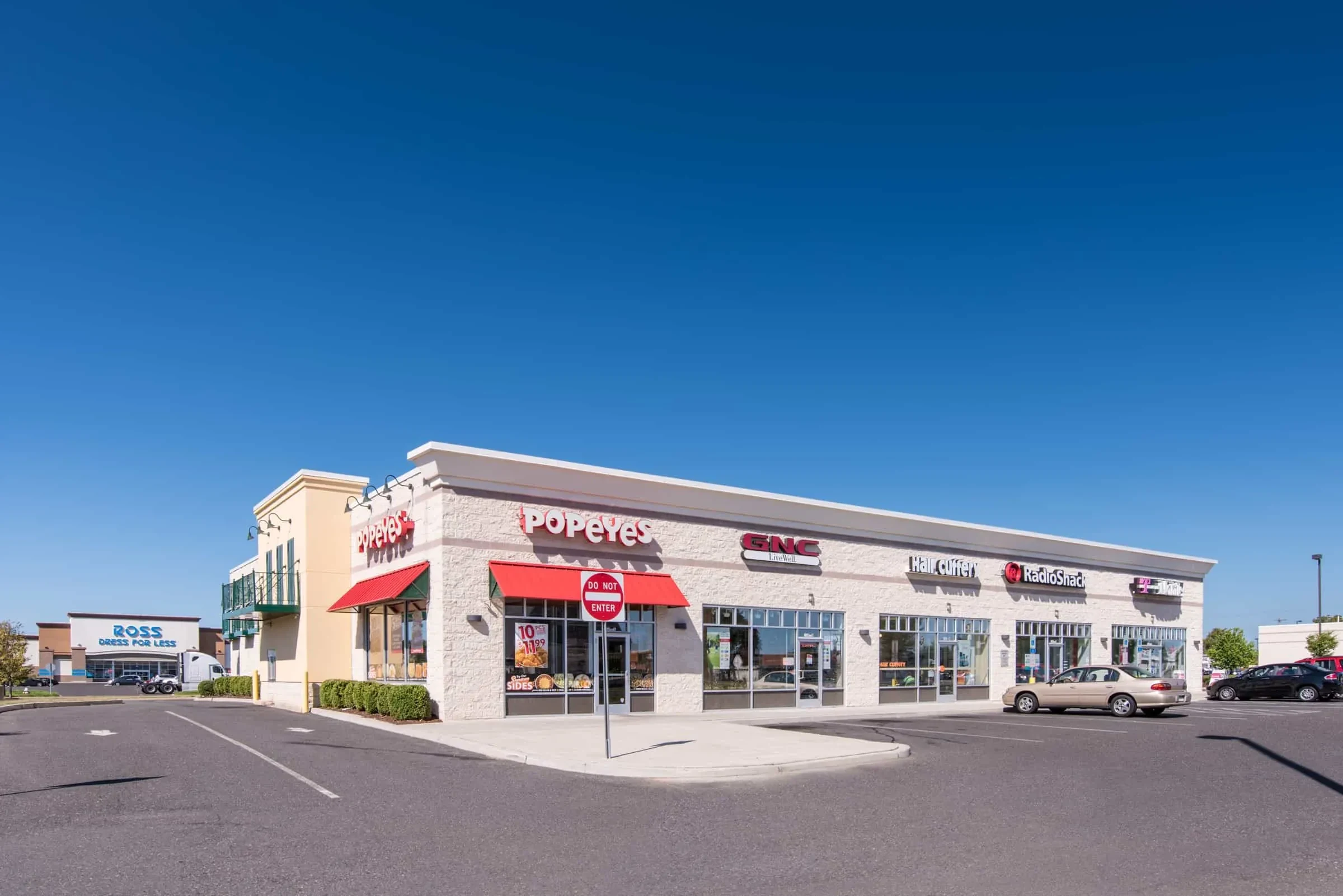
Strip retail centers along State Street, Sandhill Road, and the smaller commercial nodes spread through Orem, Springville, and Pleasant Grove usually carry one continuous roof deck stretched over five, ten, or more separate tenant spaces. That single shared deck is where most of the complications on these buildings come from, since a leak rarely respects a tenant lease line the way the roof plan does.
One Roof, Many Tenants, and a Lease That Doesn't Always Say Who Pays
Strip center roof responsibility gets split between landlord and tenant in ways that vary from lease to lease, and we've worked with enough property owners in this valley to know that figuring out who's responsible for what often takes longer than the repair itself. We document exactly which section of roof a leak or repair affects and where that falls relative to tenant space boundaries, giving the property owner or manager something concrete to work from when sorting out lease responsibility.
A repair that seems to only affect one tenant's space can sometimes trace back to a rooftop unit or penetration serving a completely different suite, and we trace that path before recommending who needs to be involved in a fix.
Coordinating Work Across Businesses That Don't Share a Schedule
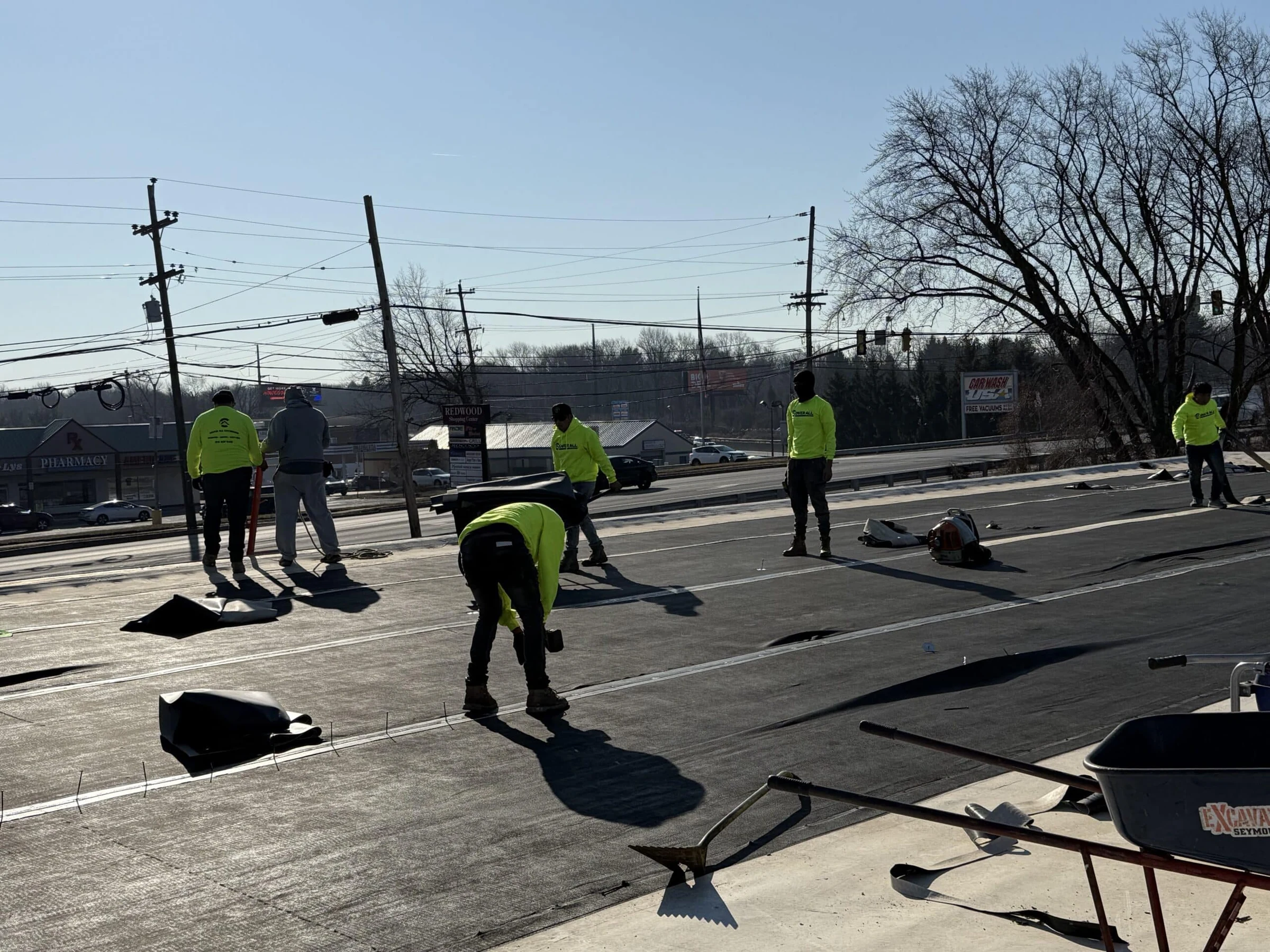
A strip center full of independent businesses means no single quiet window works for everyone. A nail salon, a restaurant, and an insurance office in the same building all have different hours and different tolerance for noise or staging equipment near their entrance. We work with the property manager to sequence work tenant by tenant, moving equipment and staging along the roof to minimize how many businesses are disrupted at any one time.
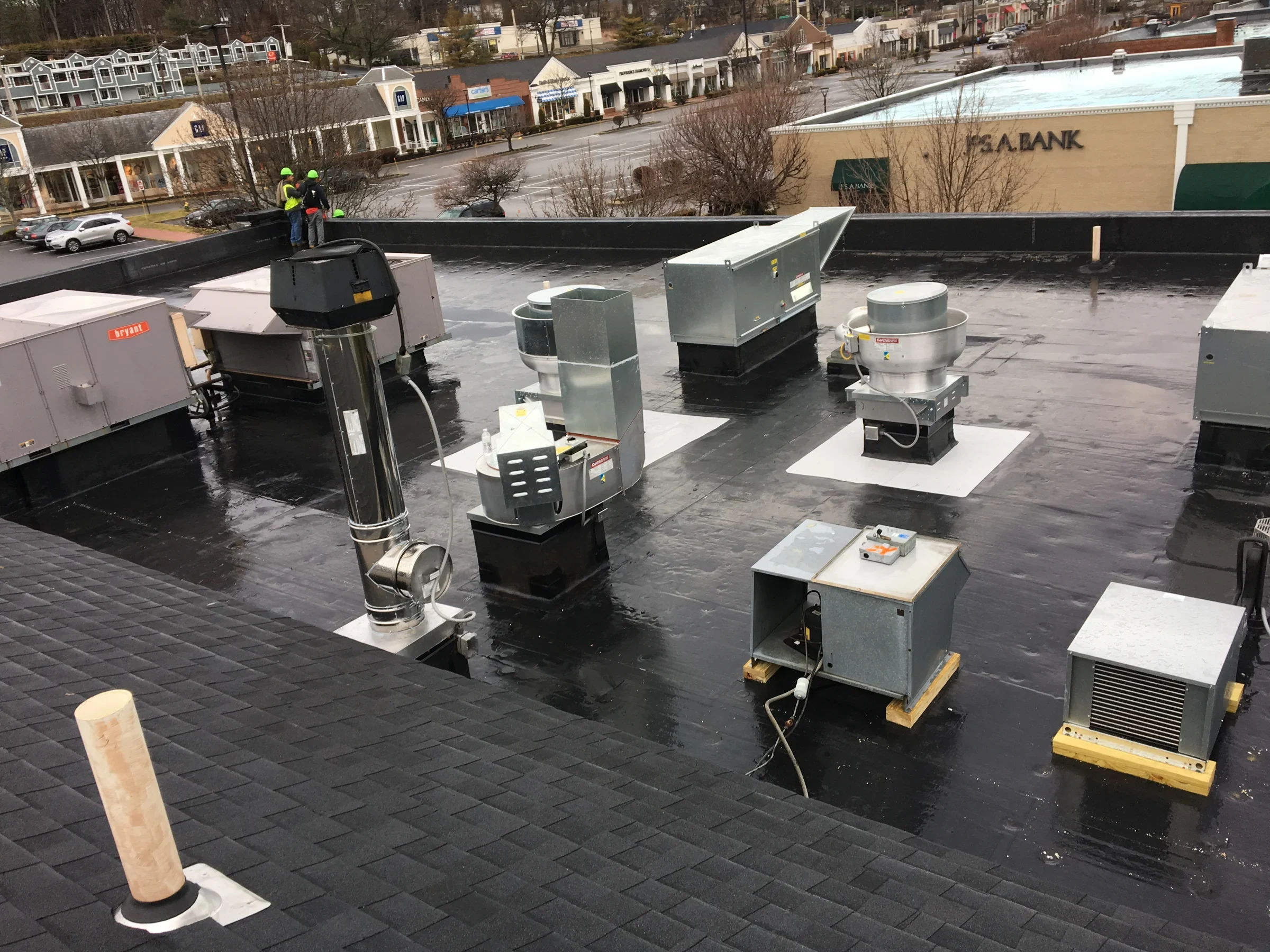
Restaurant tenants add their own layer, since kitchen exhaust penetrations need specific attention and grease buildup around those roof sections is a fire and maintenance concern we flag separately from the rest of the roof.
Divided HVAC Zones Mean Divided Energy Priorities
Each tenant space in a strip center typically runs its own rooftop HVAC unit, which means energy performance on this roof type isn't a single building-wide number, it's a patchwork of individual tenant systems all sitting on the same membrane. A dark, aging membrane raises surface temperature under every one of those units at once, and tenants with the tightest margins, often smaller retail and service businesses, feel that utility cost increase the hardest.
We talk to property owners about reflective recover options specifically because a membrane upgrade benefits every tenant's HVAC bill simultaneously, which is a stronger value proposition to bring to a tenant improvement conversation than almost any other capital project on the building.
- Neighborhood strip centers with five to fifteen tenant suites
- Restaurant and food-service tenant spaces with kitchen exhaust
- Retail and service tenant mixes along State Street corridors
- Strip centers with a grocery or big-box anchor tenant
- Medical and professional office tenants inside retail strips
- Older strip centers with legacy built-up or modified bitumen roofs
Rooftop Unit Density Creates Its Own Maintenance Pattern
A strip center roof often carries more rooftop penetrations per square foot than almost any other commercial building type, with each tenant's HVAC unit, exhaust fan, and sometimes signage conduit adding another curb or penetration to track. We map every rooftop unit against its tenant space during inspections, since a strip center roof with a decade or more of tenant turnover often has curbs and penetrations left behind by businesses that moved out years ago.
Those abandoned penetrations are a common source of leaks that get misattributed to an active tenant's equipment, and clearing up that confusion is often the first thing we do on an older strip center inspection.
Reporting That Helps a Property Owner Plan Ahead of Tenant Turnover
Strip center ownership benefits from knowing roof condition well ahead of a tenant improvement or lease renewal, since roof capital work is far easier to plan around a vacancy than around an occupied, operating business. We give property owners condition reports section by section across the roof, flagging which areas are likely to need attention soonest so that work can be timed against natural vacancy windows when possible.
We also note when a section serving multiple tenants is showing wear, since coordinating that repair takes more lead time than a single-tenant fix and benefits from being planned well before it becomes an emergency call.
Questions Strip Center Owners and Managers Ask Us
How do you figure out who's responsible for a leak, landlord or tenant?
We document exactly which roof section and rooftop unit a leak traces back to, giving you clear information to work from against your lease terms.
Can you work around businesses that all keep different hours?
Yes, we sequence work tenant by tenant and coordinate staging to minimize disruption to whichever businesses are open at a given time.
Does a roof upgrade actually help our tenants' HVAC bills?
A reflective recover reduces surface heat under every tenant's rooftop unit at once, which is a real utility benefit across the whole center, not merely one suite.
Do you find leftover roof penetrations from tenants who've moved out?
Often, yes, and clearing up which curbs and penetrations are still active versus abandoned is usually the first step on an older strip center inspection.
Can you time a roof section repair around a lease turnover?
We flag wear by roof section well ahead of time so repairs can be planned around natural vacancy windows when possible.