
HOME    Commercial Roofing Services    Commercial Roof Repair in Provo

Commercial Roof Repair in Provo


Commercial Roofing • Commercial Roofing Services • Provo,
Commercial Roof Repair in Provo
Commercial Roof Repair in Provo view 1Commercial Roof Repair in Provo view 2Commercial Roof Repair in Provo view 3Commercial Roof Repair in Provo view 4Commercial Roof Repair in Provo view 5Commercial Roof Repair in Provo view 6Commercial Roof Repair in Provo view 7Commercial Roof Repair in Provo view 8

Tracing Leaks Through Freeze-Thaw Cracking and Spring Snowmelt

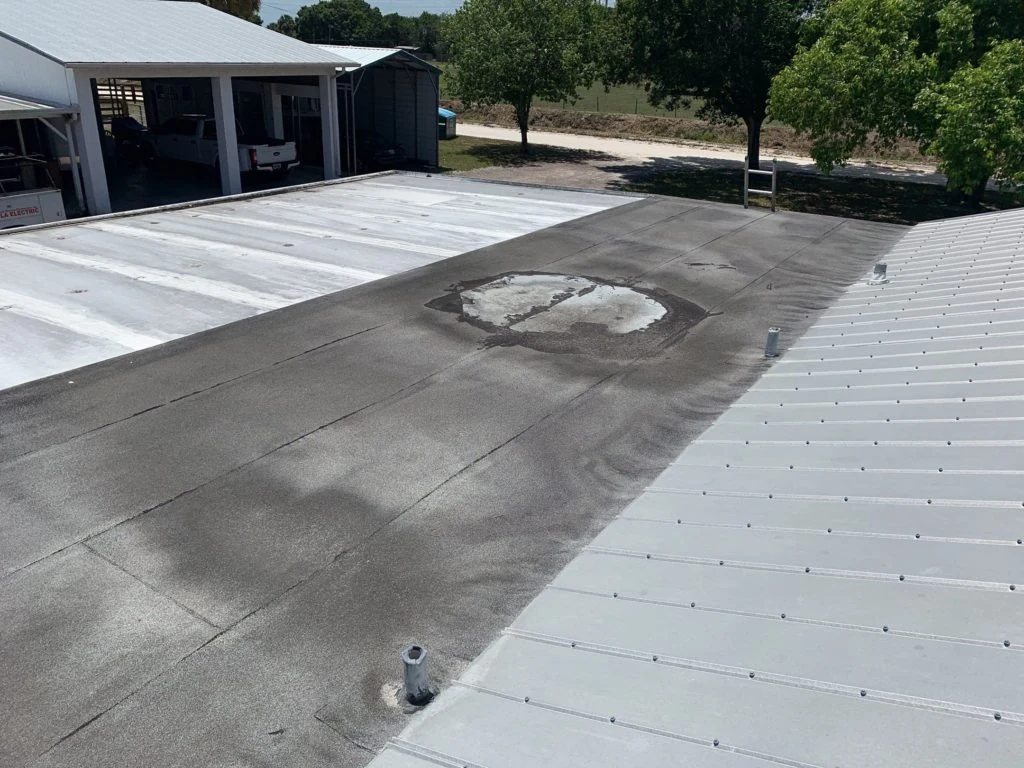
The scope documents leak sources, repair boundaries, photos, and priorities so Provo owners can separate immediate stabilization from longer-term capital work. A roof leak rarely shows up directly under the hole that caused it. Water travels along deck seams, insulation joints, and structural members before it finds a ceiling tile to stain, which is why leak calls that get "fixed" with a patch over the interior stain often come right back. We trace leaks to their actual source before touching anything.

Leak calls also tend to arrive right when a heavy melt or a sudden wind event has already put fresh stress on a roof that had been holding fine for months. That timing pressure is exactly when a rushed guess at the source does the most damage, since a wrong patch during an active weather stretch leaves the real entry point open through several more days of exposure before anyone realizes the fix did not hold.

Why Interior Stains Lie About Leak Location

On industrial buildings around Springville and Spanish Fork with exposed steel deck and open-web joists, water entering at a parapet can travel ten or fifteen feet along a purlin before dripping down at a spot nowhere near the actual breach. We start every leak call by mapping the interior stain against the roof's structural layout, then walk the roof above and slightly upslope of that point looking for the actual entry, rather than assuming the leak is directly overhead.

Flat commercial roofs make this worse than a sloped residential roof would, because there is no consistent downhill path pulling water toward one predictable spot. A membrane seam, a pipe boot, and a parapet coping joint can all be candidates, and guessing wrong means a repair that does nothing.

How Freeze-Thaw Cycling Opens New Leak Paths

Utah County's freeze-thaw pattern is a steady source of new leak points on roofs that were otherwise holding up fine. Water gets into a hairline crack in a sealant joint or a small membrane split during a warm afternoon, then freezes overnight and expands, widening the crack. Repeat that cycle across a winter and a defect that started as cosmetic becomes an active leak path. We see this most on modified bitumen and older EPDM roofs with aging sealant at penetrations, where flashings that looked fine in fall have opened up by the time spring arrives.

Metal roof systems get a related but distinct version of this problem at fastener penetrations, where repeated expansion and contraction backs out screws over several freeze-thaw seasons until the washer no longer seals.

Spring Snowmelt and Saturated Insulation

The heavy, wet spring snow that falls along the Wasatch Front does more damage during melt than during the actual snowfall. A slow melt over several days sends a steady volume of water across the roof surface, finding every existing weak point and holding standing water against seams and flashings far longer than a summer rainstorm would. Insulation that gets saturated during this stretch loses R-value even where the membrane above it never technically failed, which shows up later as an unexplained jump in heating cost the following winter.

We prioritize snowmelt-season leak calls differently than dry-season calls, because a roof that is actively saturating insulation underneath needs faster attention than a slow drip that has been stable for months.

  • Interior stain location mapped against roof structural layout
  • Membrane seams and laps probed for separation
  • Flashing and sealant joints checked at every penetration
  • Moisture scan where insulation saturation is suspected
  • Parapet coping and termination bar inspected for gaps
  • Drain and scupper areas checked for backed-up debris holding water

Repair Versus the Start of a Bigger Problem

Most leak calls end with a targeted repair: resealing a penetration, patching a seam, replacing a section of failed flashing. But a leak call is also useful diagnostic information about the roof as a whole. If we find one seam that has opened from age-related shrinkage, we check comparable seams elsewhere on the roof rather than assuming it was an isolated defect, since a membrane old enough to shrink in one spot is usually old enough to be shrinking elsewhere too.

We also weigh whether a leak is worth treating as an isolated repair or as the trigger for a broader maintenance visit. On buildings that already have a service history with us, a new leak often correlates with something we flagged as a minor issue on a prior inspection, which is a useful signal that the maintenance interval on that roof may need to tighten rather than stay on its current schedule.

Leak Repair Questions From Utah County Building Owners

Why did the leak come back after a previous repair?

Usually because the original repair addressed where the water was dripping inside rather than where it was actually entering the roof. Water travel along structural members makes this a common mistake.

Can a leak be repaired without knowing the exact cause?

Not reliably. We trace and confirm the source before repairing, because a repair aimed at the wrong spot wastes the trip and leaves the actual leak active.

Does freeze-thaw cracking mean the whole roof needs replacement?

Not necessarily. Isolated sealant and flashing cracking is a normal maintenance item on an aging roof. It becomes a replacement conversation when cracking is widespread or the membrane itself is failing.

How urgent is a leak during spring snowmelt?

More urgent than a similar leak in dry summer conditions, since ongoing melt keeps feeding water into the same entry point for days at a time.

Will wet insulation dry out on its own after a leak is fixed?

Rarely completely. Saturated insulation typically needs to be assessed and often replaced in the affected area, since trapped moisture continues to degrade the board even after the leak source is sealed.

Ready to review the roof scope?

Request a Roof Assessment
Service Area
Provo, Orem, Utah County, and the Wasatch Front
Roof Scope
Commercial Roofing Services
Provo Office


Commercial Roof Leak Repair in Provo

The scope documents leak sources, repair boundaries, photos, and priorities so Provo owners can separate immediate stabilization from longer-term capital work. A roof leak rarely shows up directly under the hole that caused it. Water travels along deck seams, insulation joints, and structural members before it finds a ceiling tile to stain, which is why leak calls that get "fixed" with a patch over the interior stain often come right back. We trace leaks to their actual source before touching anything.

Leak calls also tend to arrive right when a heavy melt or a sudden wind event has already put fresh stress on a roof that had been holding fine for months. That timing pressure is exactly when a rushed guess at the source does the most damage, since a wrong patch during an active weather stretch leaves the real entry point open through several more days of exposure before anyone realizes the fix did not hold.

Why Interior Stains Lie About Leak Location

On industrial buildings around Springville and Spanish Fork with exposed steel deck and open-web joists, water entering at a parapet can travel ten or fifteen feet along a purlin before dripping down at a spot nowhere near the actual breach. We start every leak call by mapping the interior stain against the roof's structural layout, then walk the roof above and slightly upslope of that point looking for the actual entry, rather than assuming the leak is directly overhead.

Flat commercial roofs make this worse than a sloped residential roof would, because there is no consistent downhill path pulling water toward one predictable spot. A membrane seam, a pipe boot, and a parapet coping joint can all be candidates, and guessing wrong means a repair that does nothing.

How Freeze-Thaw Cycling Opens New Leak Paths

Utah County's freeze-thaw pattern is a steady source of new leak points on roofs that were otherwise holding up fine. Water gets into a hairline crack in a sealant joint or a small membrane split during a warm afternoon, then freezes overnight and expands, widening the crack. Repeat that cycle across a winter and a defect that started as cosmetic becomes an active leak path. We see this most on modified bitumen and older EPDM roofs with aging sealant at penetrations, where flashings that looked fine in fall have opened up by the time spring arrives.

Metal roof systems get a related but distinct version of this problem at fastener penetrations, where repeated expansion and contraction backs out screws over several freeze-thaw seasons until the washer no longer seals.

Spring Snowmelt and Saturated Insulation

The heavy, wet spring snow that falls along the Wasatch Front does more damage during melt than during the actual snowfall. A slow melt over several days sends a steady volume of water across the roof surface, finding every existing weak point and holding standing water against seams and flashings far longer than a summer rainstorm would. Insulation that gets saturated during this stretch loses R-value even where the membrane above it never technically failed, which shows up later as an unexplained jump in heating cost the following winter.

We prioritize snowmelt-season leak calls differently than dry-season calls, because a roof that is actively saturating insulation underneath needs faster attention than a slow drip that has been stable for months.

Repair Versus the Start of a Bigger Problem

Most leak calls end with a targeted repair: resealing a penetration, patching a seam, replacing a section of failed flashing. But a leak call is also useful diagnostic information about the roof as a whole. If we find one seam that has opened from age-related shrinkage, we check comparable seams elsewhere on the roof rather than assuming it was an isolated defect, since a membrane old enough to shrink in one spot is usually old enough to be shrinking elsewhere too.

We also weigh whether a leak is worth treating as an isolated repair or as the trigger for a broader maintenance visit. On buildings that already have a service history with us, a new leak often correlates with something we flagged as a minor issue on a prior inspection, which is a useful signal that the maintenance interval on that roof may need to tighten rather than stay on its current schedule.

Leak Repair Questions From Utah County Building Owners

Why did the leak come back after a previous repair?

Usually because the original repair addressed where the water was dripping inside rather than where it was actually entering the roof. Water travel along structural members makes this a common mistake.

Can a leak be repaired without knowing the exact cause?

Not reliably. We trace and confirm the source before repairing, because a repair aimed at the wrong spot wastes the trip and leaves the actual leak active.

Does freeze-thaw cracking mean the whole roof needs replacement?

Not necessarily. Isolated sealant and flashing cracking is a normal maintenance item on an aging roof. It becomes a replacement conversation when cracking is widespread or the membrane itself is failing.

How urgent is a leak during spring snowmelt?

More urgent than a similar leak in dry summer conditions, since ongoing melt keeps feeding water into the same entry point for days at a time.

Will wet insulation dry out on its own after a leak is fixed?

Rarely completely. Saturated insulation typically needs to be assessed and often replaced in the affected area, since trapped moisture continues to degrade the board even after the leak source is sealed.

Treat each roof assembly on its own terms

A detail that is repairable on Silicone Roof Coating may require different preparation or materials on EPDM Black or PVC Roof Systems. Existing layers, surfacing, attachment, and earlier repair products matter before new materials are selected. Record membrane type, surfacing, insulation and cover-board clues, attachment, flashings, penetrations, edges, and earlier repairs. If the assembly cannot be confirmed visually, say so and define the core or document review needed to confirm it. Drainage stays in the analysis because a sound patch cannot correct water held against a curb, an overloaded outlet, or settlement at a low point. System language should support whether the defect is isolated, whether trapped moisture changes the scope, and whether continued spot repair remains defensible instead of functioning as a product catalog.

Roof work has to fit real operations

Healthcare Systems, Manufacturing Operators, and Retail Chain Operators do not share the same interruption tolerance. The roof scope should be written around the occupied property as well as the exterior defect. Access and protection notes should cover ladders or hatches, staging, falling-object zones, odor and noise, equipment clearances, daily cleanup, weather stops, and the rooms directly below openings or test cuts. A dry-in can be appropriate during active weather even when permanent work must wait. The crew's daily record should identify every temporary edge, cover, ballast, drain protection, and remaining exposure before leaving the property.

Make repair, restoration, and replacement distinct decisions

Before pricing becomes the focus, ownership needs an answer to whether the defect is isolated, whether trapped moisture changes the scope, and whether continued spot repair remains defensible. That answer should define the boundary between service work and a capital project. The option matrix should address present failure, remaining risk, investigation still required, installation disruption, anticipated service interval, and future maintenance. Unknown inputs should be visible rather than buried in an allowance. Ownership should be able to see why a roof can be maintained, why it qualifies for restoration, or why removal is necessary. The report earns that conclusion through field evidence rather than sales urgency.

Turn the visit into a usable next step

After this scope, the record should advance to an inspection that separates an isolated repair from restoration, recover, or replacement planning. Carrying the same roof-zone names and evidence forward prevents the next visit from starting with an empty file. A persistent roof file connects dates, weather, symptoms, findings, repairs, costs, and follow-up. Trends become visible: recurring locations, growing wet areas, drainage issues, or a rising frequency of unrelated failures. Commercial Roofers of Provo can keep inspection and maintenance active while repair, restoration, or replacement moves through a separate project opportunity. The path remains response, evidence, the right scope, closeout, and the next scheduled roof decision.

A useful response starts before roof access

The first conversation about recurring ceiling stains, active dripping, damp insulation, open laps, failed penetrations, wall-flashing defects, or earlier repairs that no longer hold should establish the Provo property address, contact on site, roof-access method, affected interior area, when water was first observed, whether entry is active, and any immediate safety concern. The caller should not be asked to diagnose the assembly from the floor. A short description of timing, location, volume, affected equipment, and previous occurrences is more useful than guessing which roof product failed. That intake determines whether the immediate need is interior protection, controlled roof access, weather-limited stabilization, drainage attention, or a scheduled diagnostic visit. It also gives the crew a safer and more focused starting point.

Price the known work without hiding the unknowns

The owner should see the boundary between the base scope and contingent work. That includes moisture limits, substrate repair, additional layers, damaged deck, blocked piping, inaccessible details, hazardous materials, and work by other trades. Exclusions should not function as an escape hatch. Each exclusion needs a reason and, where practical, a defined way to resolve it through testing, access, document review, engineering, or a unit-price condition discovered during construction. A reviewable proposal lets ownership compare boundaries, evidence, materials, quantities, disruption, and closeout—not just totals. The goal is a scope that remains understandable after the salesperson leaves the room.

How Provo operating conditions shape the review

Provo, UT roofs work through snow, intense ultraviolet exposure, wind, freeze-thaw cycling, and broad daily temperature changes. That exposure guides the field sequence, but it does not by itself explain recurring ceiling stains, active dripping, damp insulation, open laps, failed penetrations, wall-flashing defects, or earlier repairs that no longer hold. Start with the room, ceiling grid, equipment, wall line, and time of entry, then carry those coordinates to the roof. Comparing high and low points, rooftop details, prior patches, and flow paths is more reliable than standing over the first wet-looking surface. This distinction protects the owner from treating a correlation as proof. It also lets the next technician revisit the precise unknown instead of repeating the entire investigation.

Build a roof record another decision-maker can use

For Commercial Roofers of Provo, the field file should capture the affected interior zone, roof-area map, repair history, membrane condition, wet-area indicators, photographs, test locations, and the exact limits of the proposed repair. Each note needs a roof-area reference so a photograph or recommendation can be found again after the visit. The field sequence is to trace the water path from the interior evidence back through roof elevations, seams, penetrations, curbs, walls, edges, and drains instead of sealing the first suspicious detail. Photographs should show context and detail, and test locations should explain what question was being answered and how the opening was closed. Observed facts, recommended actions, completed work, and open items should never share one unlabeled list. Separating them lets an off-site approver see exactly what was authorized and what still needs a decision.

Provo decision checklist

  • Map the interior symptom to a named roof area before selecting a repair detail.
  • Record temporary measures separately from permanent work and list every open item.
  • Verify drainage, penetrations, walls, edges, earlier repairs, and transitions around the affected area.
  • State the observed roof assembly, unknown construction, access limits, and testing assumptions.
  • Connect the recommendation to repair, restoration, replacement, maintenance, or capital-planning thresholds.
  • Set the next inspection or follow-up date so the roof history continues after this visit.

Commercial roof decision questions

Does this condition automatically mean the roof must be replaced?

No. The review should establish whether the defect is isolated, whether trapped moisture changes the scope, and whether continued spot repair remains defensible. Replacement becomes a defensible recommendation only when the field evidence, moisture, assembly condition, repair history, deck or attachment concerns, and lifecycle comparison support it.

What should the Provo roof scope document?

It should document the affected interior zone, roof-area map, repair history, membrane condition, wet-area indicators, photographs, test locations, and the exact limits of the proposed repair. It should also label temporary and permanent work separately, state assumptions and exclusions, and identify the inspection or service step that follows the current scope.

How does an urgent call become a maintenance or capital plan?

The immediate visit creates the first roof-area record. A follow-up inspection establishes condition and priorities. Completed repairs, recurring observations, drain service, warranties, and future recommendations are then retained so maintenance stays scheduled and larger work can be placed into the appropriate capital year.

From service call to roof plan

Use the next decision, not the biggest sale.

Stabilize the problem, document the roof, compare the viable paths, and keep the resulting roof history active.

Request commercial roof help

AboutServicesRoof SystemsProject TypesService AreasRequest a Roof AssessmentRequest Roof Help
Roof Help