SBS Modified Bitumen: A Multi-Ply System Built for Hail and Mechanical Traffic
SBS-modified bitumen is the roof system we reach for when a building needs redundancy more than it needs top-end reflectivity: older industrial buildings around Lindon's Geneva Road corridor, flex space in Springville with heavy rooftop mechanical loads, and any roof that takes regular foot traffic from maintenance crews. Multiple plies mean multiple layers of protection instead of a single membrane standing between the deck and the weather. It's the older, proven approach dressed up with better polymer chemistry than the straight asphalt built-up systems it descended from.
Why Multiple Plies Matter Against Utah Valley Hail
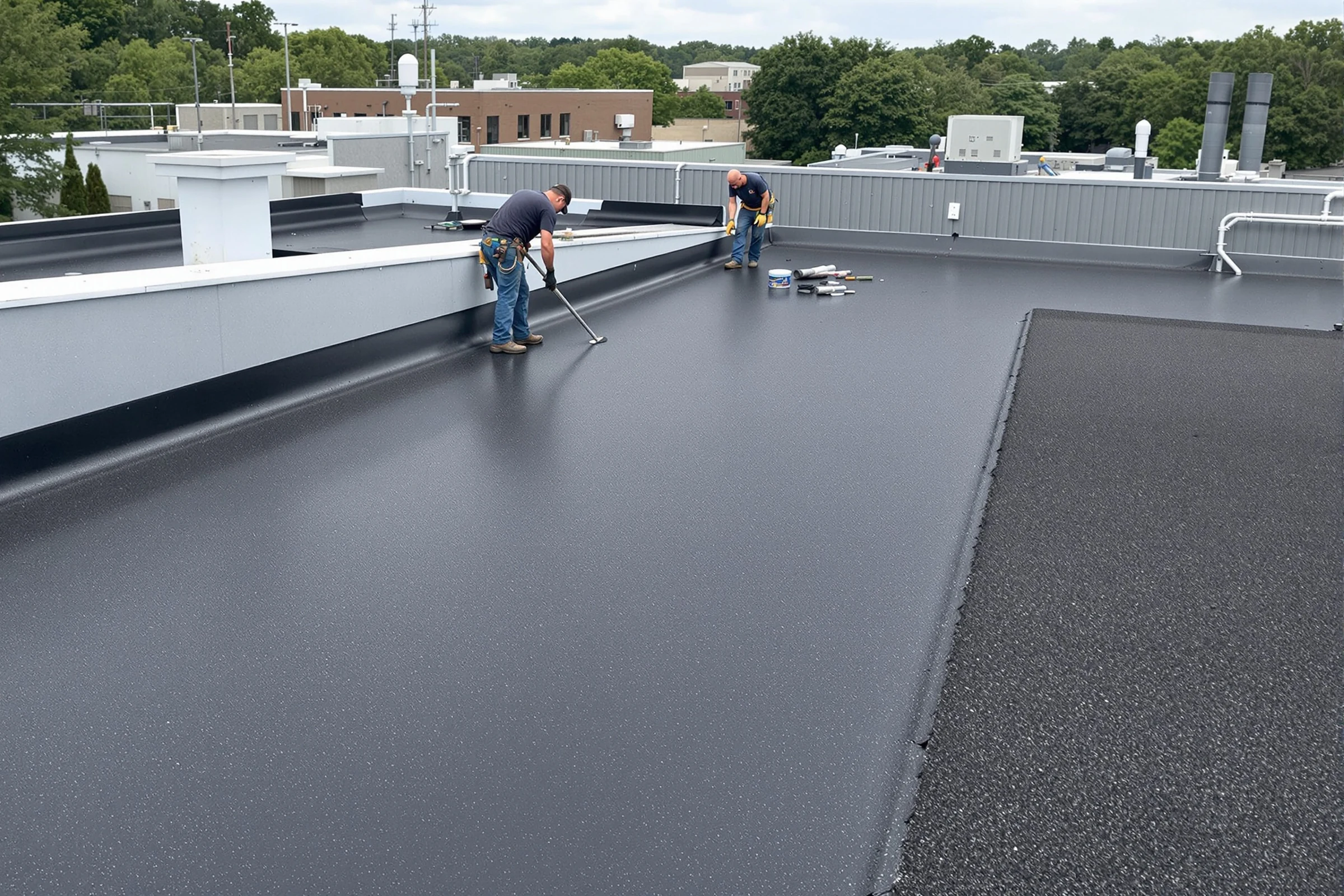
Wasatch Front thunderstorms produce hail often enough that it factors into roofing decisions on the valley floor, not only in the mountains above it. A single-ply membrane that takes a hail hit can puncture straight through to the insulation. A multi-ply SBS system distributes that impact across layers, and a granulated cap sheet adds another buffer of surface protection. For buildings that have already taken hail damage once, moving to a multi-ply system is often the more resilient rebuild.
The base and interply sheets also give the system tear resistance that matters on roofs seeing regular equipment service, ladder traffic, or seasonal snow-removal work. A membrane that can absorb foot traffic without surface damage saves on repair calls over the life of the roof.
Torch-Applied Versus Cold-Adhered Installation
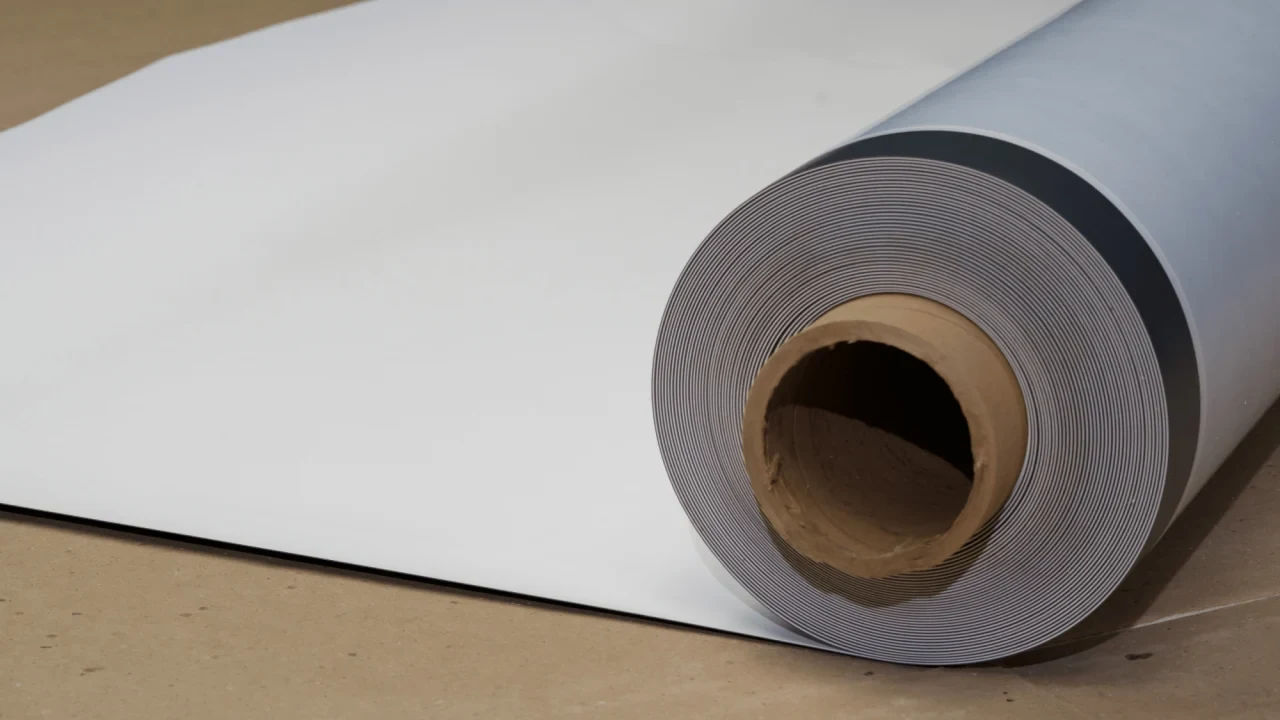
SBS sheets can be installed torch-applied, self-adhered, or with hot asphalt, and the choice depends on the building. Torch application gives the strongest ply-to-ply bond but requires open-flame work, which we plan carefully around rooftop equipment, parapet materials, and any occupied space directly below. Cold-adhered and self-adhered systems avoid the open flame entirely and are frequently the better call on occupied buildings near BYU and UVU where fire watch requirements would otherwise complicate scheduling.
Whichever method we use, seam lap width and interply offset get checked at every course, since a shortcut there is where a multi-ply system's redundancy advantage disappears.
Cap Sheet Selection Drives the Energy Math
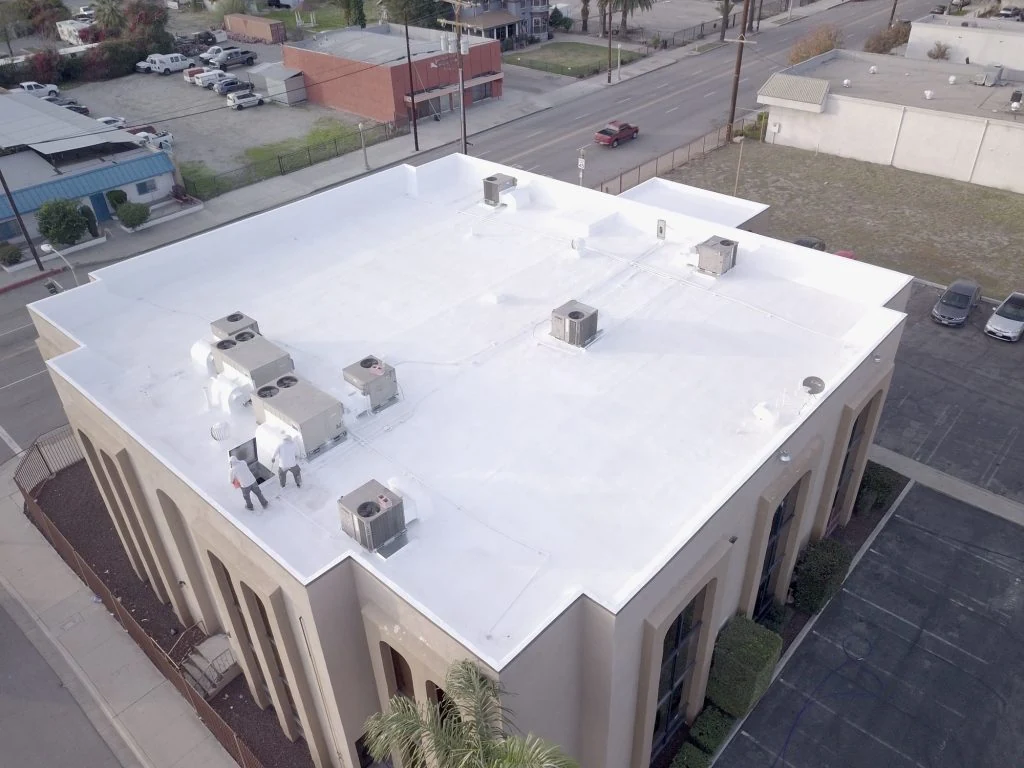
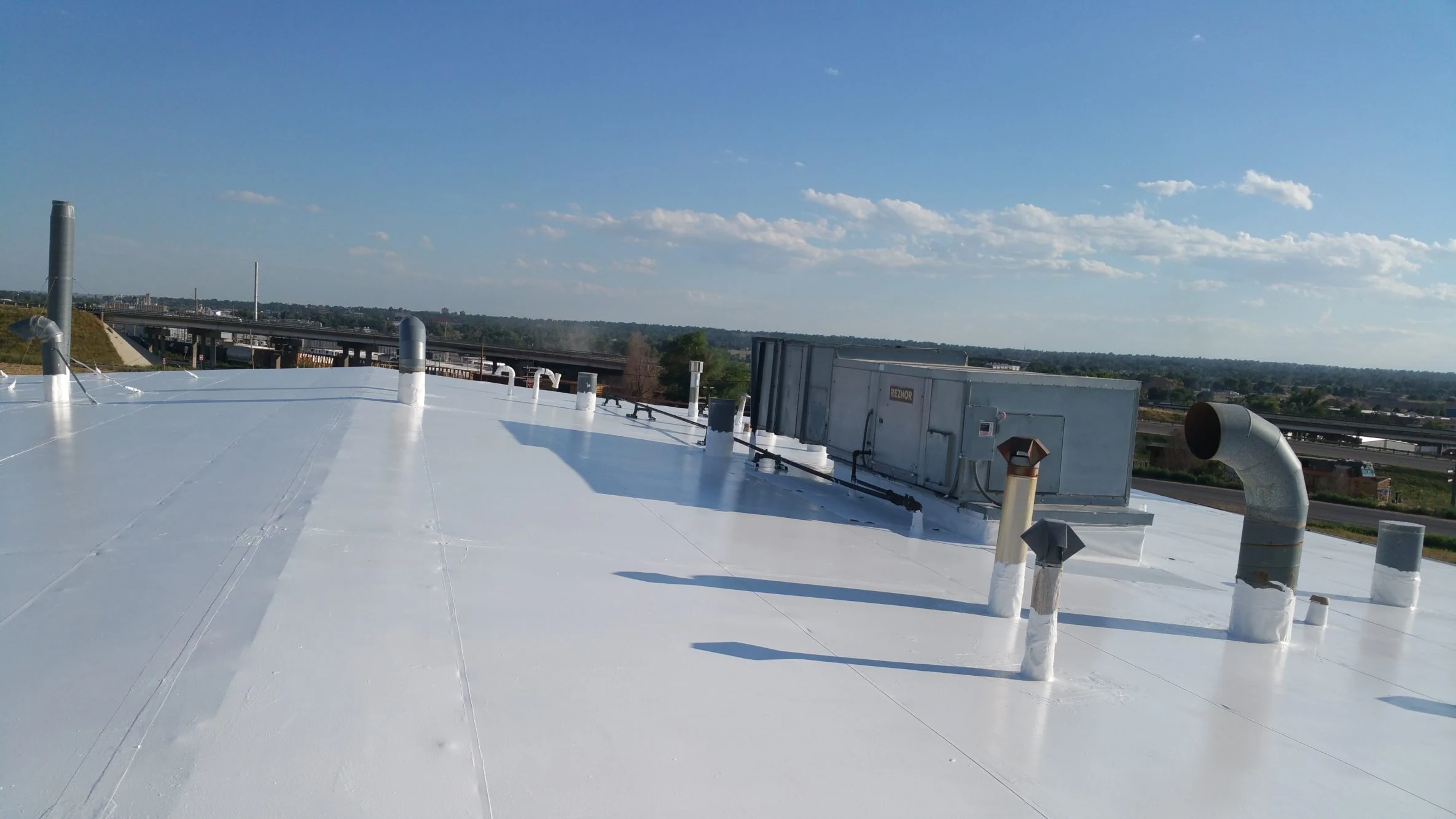
Modified bitumen's reputation for dark, heat-absorbing roofs comes from granulated cap sheets in traditional gray or black. That's no longer the only option. A reflective, factory-applied white cap sheet or a post-install acrylic or silicone coating over a smooth cap sheet can bring an SBS roof's reflectivity close to single-ply performance while keeping the multi-ply redundancy underneath. For a building with real cooling-load exposure, like an office park near the Silicon Slopes corridor, we walk owners through that cap sheet choice specifically, because it changes the utility-cost outcome without changing the underlying system.
Snow Load and Drainage Planning
Multi-ply systems add roof dead load that has to be checked against the structural deck, particularly on older buildings being re-roofed rather than built new. Utah Valley's wet, heavy spring snow sits on flat roofs for days, and drainage planning, positive slope to drains and scuppers, matters as much as the membrane spec itself. We check existing tapered insulation and drain locations before recommending a system, since a well-built SBS roof with poor drainage will still pond and age faster than it should.
On older buildings, drain lines themselves can be undersized for current code or partially blocked from decades of debris, and a re-roof is the right time to correct that rather than laying new membrane over a drainage problem that will keep causing trouble. We inspect drain bowls, overflow scuppers, and interior leader lines as part of the same site visit.
- Older industrial and flex buildings along Geneva Road and I-15
- Roofs with a documented hail-damage history
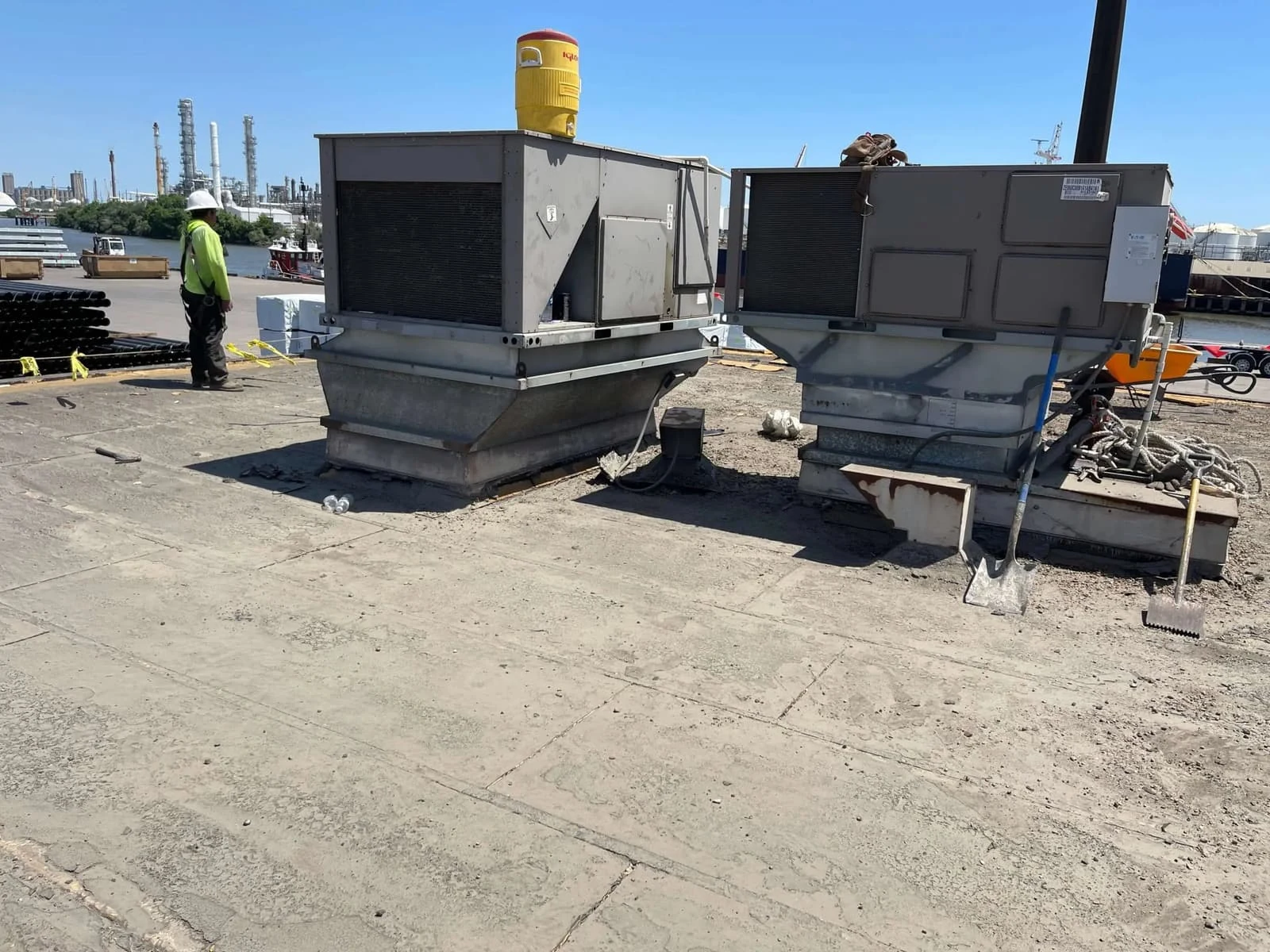
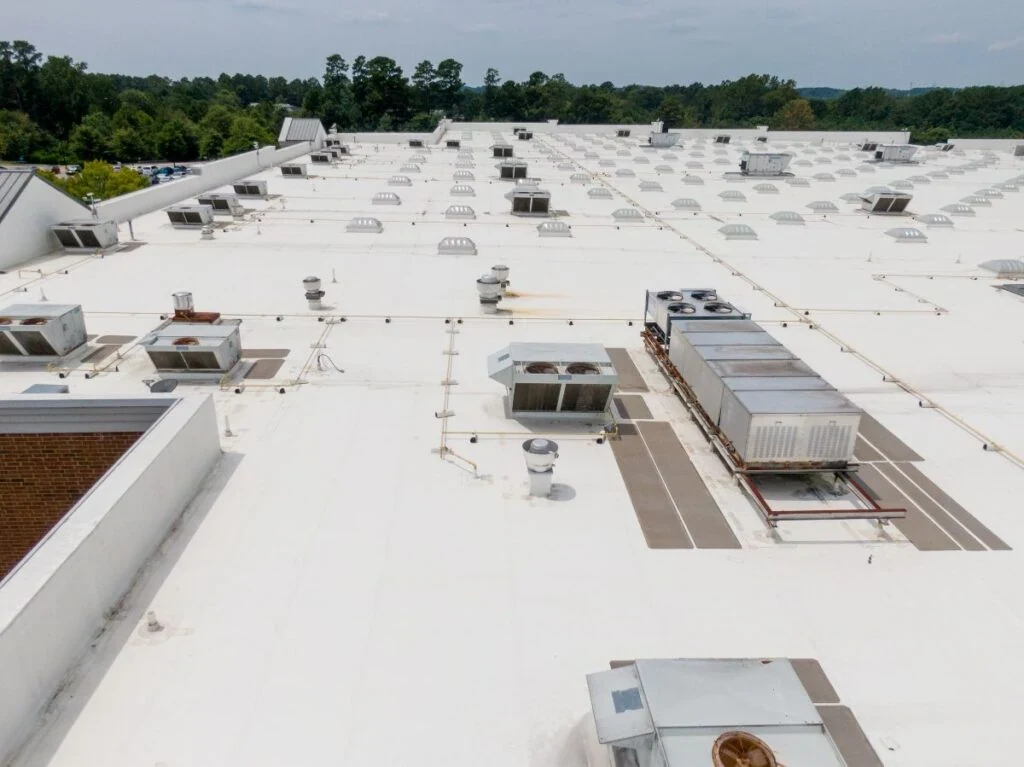
- Buildings with heavy rooftop equipment and frequent service traffic
- Institutional roofs near BYU and UVU needing fire-watch-sensitive installation
- Re-roofs where structural load capacity is already tight
Where SBS Fits Against Single-Ply Options
SBS modified bitumen typically costs more than TPO per square foot and installs slower, since it's a multi-course system rather than a single sheet. We recommend it when the building's history or use case calls for that extra redundancy, not as a default. On a clean, low-traffic office roof with no hail history, single-ply usually delivers comparable performance for a lower installed cost and faster project timeline.
Common Questions About Modified Bitumen Roofs
Can an SBS roof match TPO's reflectivity?
With a reflective cap sheet or coating, yes, close to it. Traditional granulated dark cap sheets will not, and that's a real trade-off to weigh against the system's added durability.
Is torch-applied installation safe on occupied buildings?
It can be, with proper fire watch and material staging, but we default to cold-adhered or self-adhered systems on occupied buildings where open flame adds unnecessary risk or scheduling friction.
How does SBS handle Provo's freeze-thaw cycling?
The SBS polymer modification is specifically what gives the asphalt flexibility at low temperatures, which is the whole reason it replaced straight built-up roofing in cold-climate markets. It stays pliable through the swings this valley sees each spring.
Does a multi-ply system need more structural review before installation?
Often, yes, especially on older buildings. We check dead load capacity against the added weight of a multi-ply system before finalizing a spec, particularly on re-roofs over existing decking.
What's the biggest maintenance issue on modified bitumen roofs here?
Ponding water at poorly sloped drains. It's not unique to SBS, but a multi-ply system sitting in standing water ages faster than one with clean positive drainage, so we prioritize drain and scupper condition during every inspection.
Ready to review the roof scope?
Request a Roof Assessment